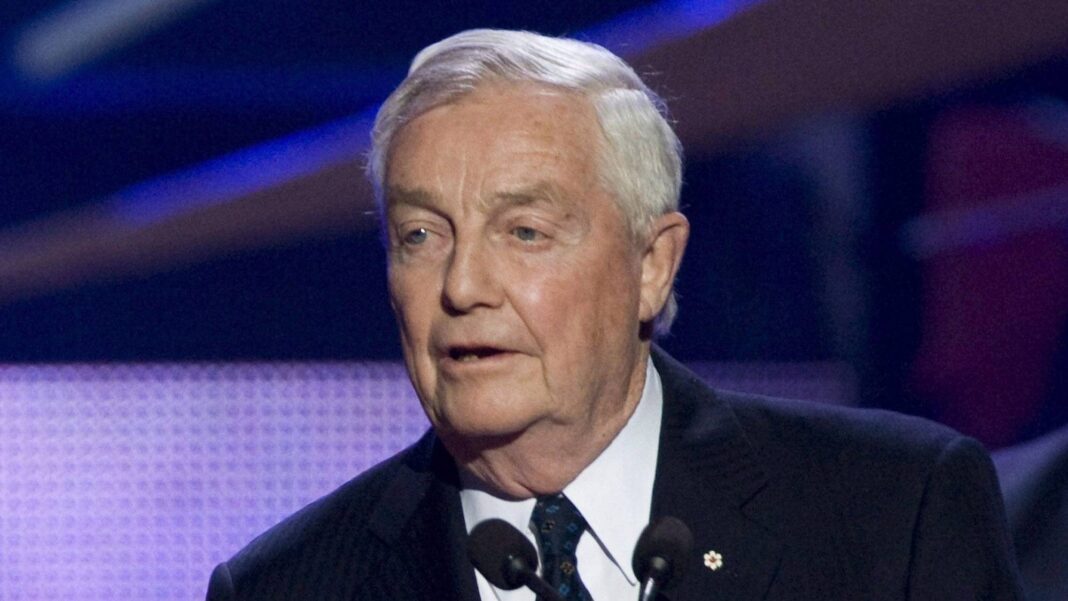

Peter Lougheed was a successful businessman, lawyer, and former Premier of Alberta. He played a pivotal role in establishing Alberta as a province, earning both recognition and admiration among its people, reports edmonton-yes.
Childhood and Education
Peter was born on July 26, 1928, in Calgary. His grandfather was the only Albertan ever to be knighted and the first Conservative to serve in the federal cabinet.
Peter grew up as a calm, inquisitive boy. After attending several public schools, he enrolled at the University of Alberta. During his student years, he developed a passion for sports and played football for the Golden Bears Intercollegiate Football Club and the Edmonton Eskimos. Thanks to his strong performance, he was appointed president of the student union. Having earned both a Bachelor of Arts and a Bachelor of Laws at the university, Peter then went on to Harvard University, where he obtained a Master of Business Administration. Next, he ventured into business, quickly showcasing his leadership skills. In 1954, Lougheed joined one of Canada’s largest construction firms, and within a year, he was invited to the Alberta Bar, launching an active legal practice in Calgary. In 1956, he became chief legal counsel at Mannix Corporation, later rising to vice president, and by 1962 he was running his own private practice.
Working for the Greater Good as Premier
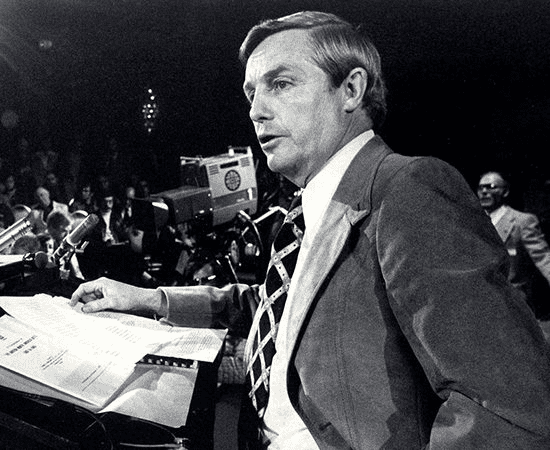
In 1965, at 36 years old, Lougheed was elected leader of the Progressive Conservative Party of Alberta—a major accomplishment and a source of personal pride. Just two years later, Peter became a member of the Legislative Assembly for Calgary-West. In 1971, the Progressive Conservative Party formed the government, ending the Social Credit Party’s long tenure, and Lougheed became Premier of Alberta. From there, he guided his party to become the official opposition with six seats.
As premier, Peter defended the province’s interests. One of his first major moves was to increase the royalties that oil companies paid to Alberta. Under his administration, the government focused on securing greater benefits for Albertans from the province’s natural resources, fostering industrial development and the decentralization of urban centres, and enhancing health care services and recreational spaces. This agenda included building new hospitals, funding medical research, and supporting city parks.
Lougheed’s leadership also spurred the growth of arts and culture. He played a crucial role in the negotiations that resulted in Canada’s new Constitution in 1982. At every opportunity, he worked to ensure that Alberta and Western Canada had a prominent voice in national decision-making.
One of his most significant initiatives for safeguarding Albertans’ quality of life—for current and future generations—was the creation of the Alberta Heritage Savings Trust Fund in 1976. Through this fund, a portion of revenue from oil and gas sales was allocated to long-term investments. As part of his industrial development strategy, Lougheed encouraged the exploitation of Alberta’s vast heavy oil and oil sands reserves through tax policy and direct investment. In 1978, with the province’s involvement, the Syncrude Canada oil sands project was completed— the world’s largest single synthetic fuel production facility at the time.
Lougheed also championed the diversification of agriculture and supported small- and medium-sized businesses. In 1980, his government founded the Alberta Heritage Foundation for Medical Research, which invested $650 million in Canadian scientific research. Two years earlier, in 1978, the government set up the Alberta Opportunity Company to provide financing for innovative SMEs. By 2001, it had helped over 7,000 businesses and individuals.
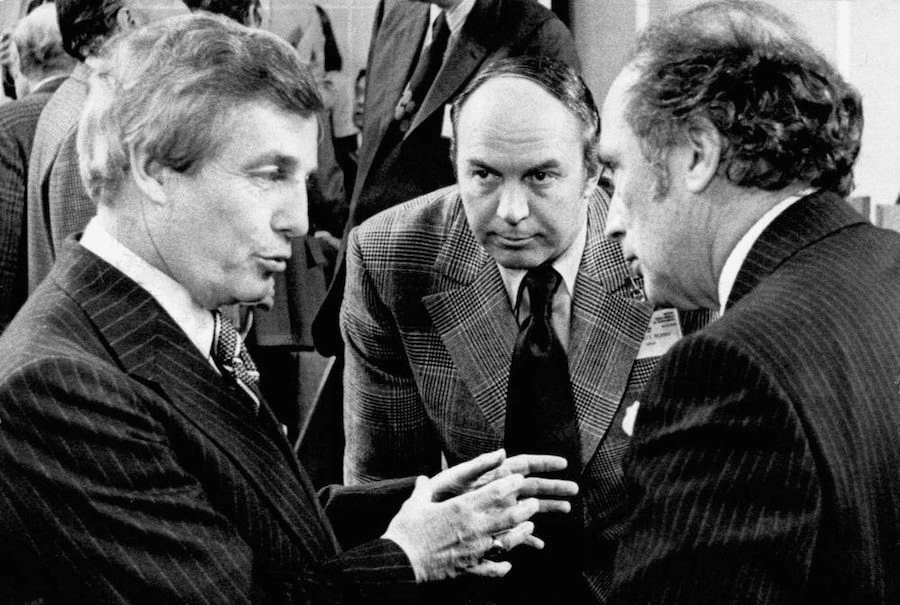
In the 1970s, Alberta’s premier advocated for a greater role in national decision-making, reflecting the province’s growing economic influence. He opposed what he viewed as federal encroachment on provincial jurisdiction while remaining a committed supporter of a united Canada. Lougheed’s main dispute with Ottawa concerned oil revenues, leading to an energy pricing agreement in 1981, whereby the federal government moved toward active negotiation over oil and gas prices and revenue shares instead of unilateral action.
During the constitutional negotiations leading up to the Constitution Act, Lougheed was a key figure. He proposed a formula that gave no single province the right to veto. However, it did permit dissenting provinces to opt out of amendments that would reduce their powers.
The people of Alberta greatly valued his competence, empathy, and integrity in government, which was reflected in his electoral victories in 1975, 1979, and 1982. On November 1, 1985, Lougheed resigned and returned to private legal practice. He also lectured at the University of Calgary and the Banff School of Management. Lougheed became a Canadian icon, respected for the values he brought to politics: competence, insight, honesty, and unwavering dedication to the well-being of both Alberta and Canada.
In 1987, Lougheed took over as head of the Canadian Alliance, an organization committed to trade, employment opportunities, and the promotion of free trade with the United States. From 1991 to 1996, he served as chair of the Canada-Japan Forum. Sitting on boards of companies with assets exceeding $230 million, Peter was a prominent figure in the corporate world. He firmly believed that Canada was far more than the sum of its economic components. In 2002, during a campaign, the former premier expressed concern about protecting Canada’s supply of fresh water, insisting that Alberta’s government should make water—rather than oil and gas—its top priority.
Awards and Honours
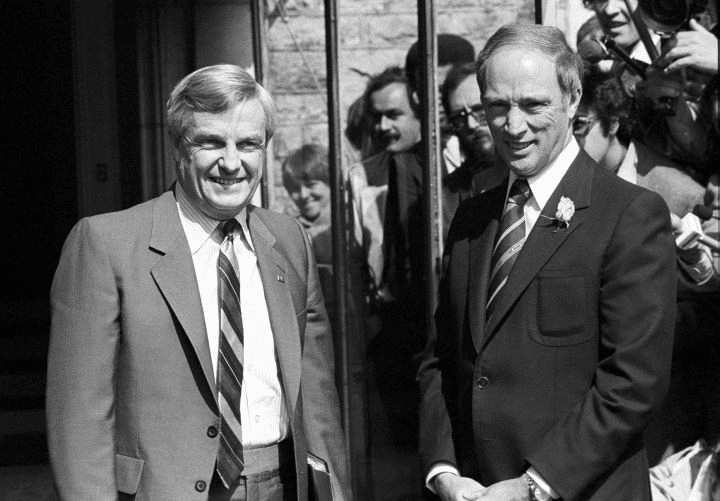
For his contributions to Albertans and Canadians, Peter received numerous accolades. In 1987, he was made an honourary chief of the Cree. In 1982, the Queen appointed him to the Queen’s Privy Council for Canada, and in 1987, he was invested as a Companion of the Order of Canada.
Sports played a big role in Peter’s life. He played professional football with the Edmonton Eskimos and was actively involved in hosting the Winter Olympics. He served as honorary chair of the organizing committee for the XV Olympic Winter Games.
In June 2012, an independent panel on behalf of the Institute for Research on Public Policy named Lougheed the best Canadian premier of the past 40 years.
On September 13, 2012, at the age of 84, Peter Lougheed passed away in the Calgary hospital that now bears his name.
In the end, Albertans remember Peter Lougheed as a defining figure of the West that emerged during the 1970s and 1980s. He transformed the province into a force in national politics and the economy. Many regard him as an outstanding Canadian statesman, a founding father, and a true patriot who strove to ensure prosperity for all citizens.
Sources: