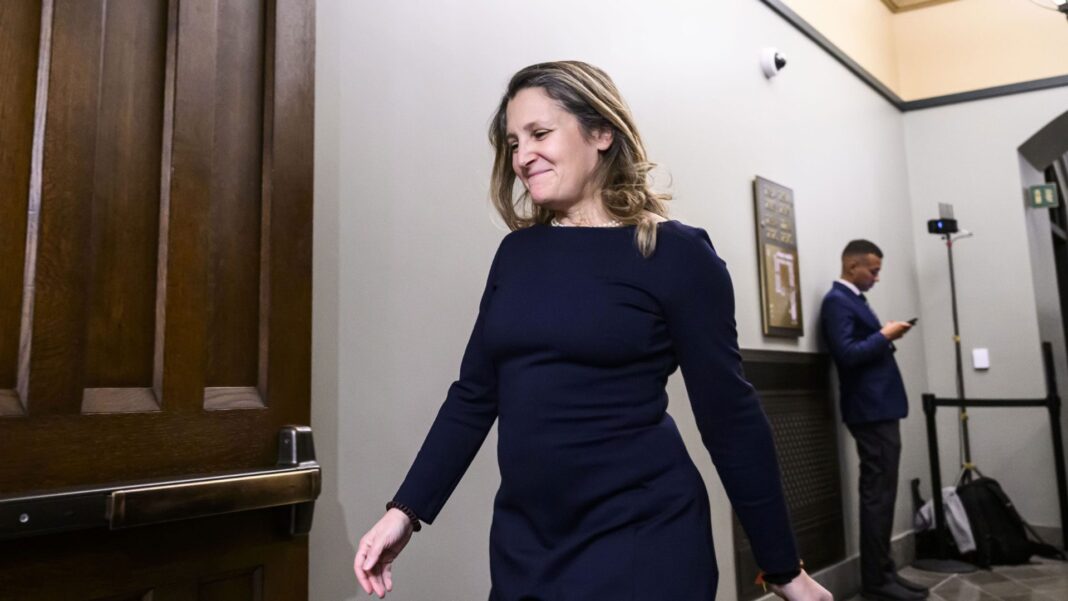

Chrystia Freeland is a prominent Canadian politician, journalist, editor, and author, currently serving as Canada’s Deputy Prime Minister. She is an active Member of Parliament for the University-Rosedale riding, representing the Liberal Party, as highlighted by edmonton-yes.com.
Early Life and Education
Born in Peace River, Alberta, Chrystia is the daughter of Donald, a lawyer and farmer, and Halyna. Her paternal great-uncle, Gerald Baldwin, was a Progressive Conservative MP and is widely regarded as the “father” of the Access to Information Act. On her mother’s side, her grandparents fled Ukraine after the signing of the German-Soviet Pact in 1939. Chrystia’s mother also ran for Parliament in Edmonton in 1988 with the New Democratic Party and managed a feminist socialist co-operative called “Hromada.”
Chrystia has often expressed immense pride in her Ukrainian heritage in numerous interviews. She is fluent in Ukrainian, English, and French. Freeland attended T.A. Norris Middle School and Old Scona Academic High School in Edmonton. From 1984 to 1986, she received a scholarship to study at the United World College of the Adriatic in Italy. She later enrolled at Harvard University, where she focused on Russian history and literature. In 1993, Chrystia earned a Master’s degree in Slavonic Studies from St. Antony’s College at Oxford University.
Journalism and Authorial Career

Freeland’s first foray into journalism was as a freelance reporter in Ukraine. She quickly became the “Financial Times” Eastern Europe correspondent and then headed the newspaper’s Moscow bureau. From 1999 to 2001, she served as deputy editor of the “Globe and Mail” before returning to the “Financial Times.” In 2010, Chrystia joined “Thomson Reuters” as managing director and editor for consumer news.
In 2000, Freeland published her first book, “Sale of the Century: Russia’s Wild Ride from Communism to Capitalism,” which explores the conflict between oligarchs and young reformers in Russia’s post-communist economy. Her second book, “Plutocrats: The Rise of the New Global Super Rich and the Fall of Everyone Else,” released in 2012, received widespread acclaim and several national awards.
First Steps into Politics

In 2013, Chrystia met Liberal Party leader Justin Trudeau at a book signing. After Bob Rae stepped down as MP for Toronto Centre, Trudeau’s team convinced Freeland to run as a Liberal candidate in the upcoming by-election. While initially hesitant, the idea of serving her country appealed to her. As a result, in the federal by-election on November 25, 2013, Freeland won with the most votes.
Following the 2015 election, Chrystia Freeland was appointed Minister of International Trade. Around the same time, “Toronto Life” magazine recognized her as one of Toronto’s 50 most influential people.
In 2016, she played a key role in negotiating the Comprehensive Economic and Trade Agreement (CETA) between Canada and the European Union. She also declared Canada’s intention to lead in establishing principles governing 21st-century international investment. In February 2016, Freeland signed a trilateral partnership agreement on behalf of Canada, but it became defunct when the United States, under President Donald Trump, rescinded its signature.
Evolving Political Career
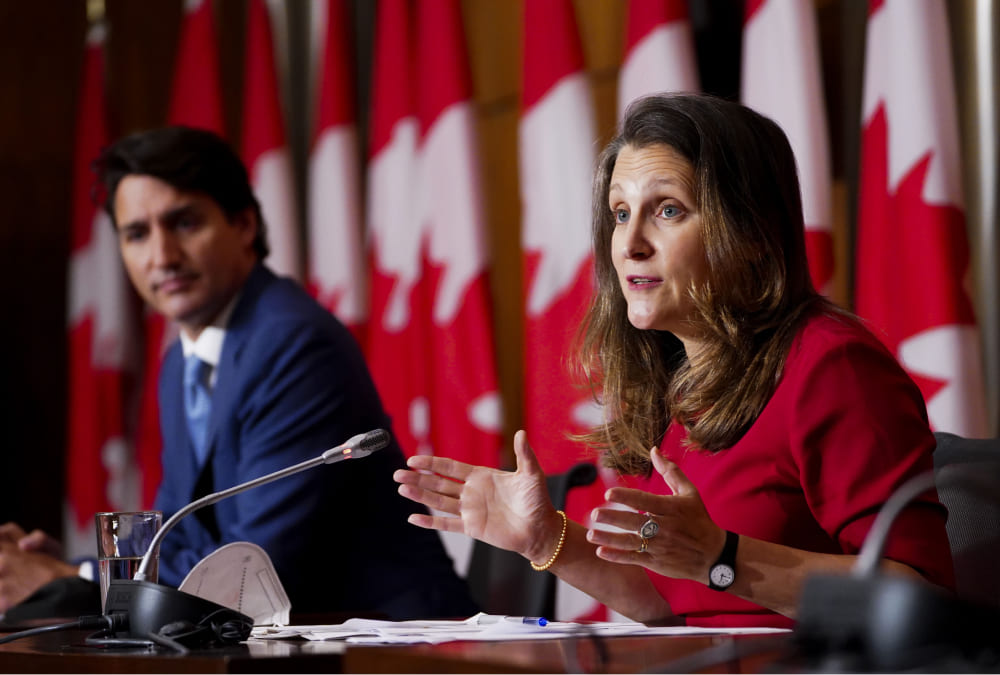
In early 2017, a major cabinet shuffle occurred in the Liberal government, likely prompted by the election of the Trump administration. Chrystia was promoted to Minister of Foreign Affairs, while retaining her portfolio overseeing Canada-U.S. trade relations.
Negotiations with the new U.S. administration proved challenging. Freeland successfully formed a bipartisan advisory council that included conservative politicians. At a meeting, the U.S. presented a series of demands that neither Canada nor Mexico accepted. Meanwhile, Canada sought exemptions from tariffs on certain goods, such as steel. The negotiations dragged on, boosting Freeland’s international standing.
In August 2017, Trump announced that the U.S. and Mexico would exclude Canada from negotiations, causing widespread panic. Despite this, Chrystia and U.S. negotiator Robert Lighthizer managed to finalize an agreement by the September 30 deadline. The Canada-United States-Mexico Agreement (CUSMA) included new provisions related to intellectual property and opened Canada’s dairy market to U.S. producers.
In May 2019, Freeland pressured the U.S. to lift tariffs on Canadian steel and aluminum. By May 17, the U.S. government agreed to remove them, and Canada consequently withdrew its countermeasures.
Politician’s Role in International Relations
Before joining the cabinet, Chrystia Freeland was a vocal critic of former Ukrainian President Viktor Yanukovych. She also condemned Russia’s aggression against Ukraine. In a 2014 “Globe and Mail” article, she argued that Canada had a duty to impose sanctions on Yanukovych and his political allies. In 2017, media reports surfaced claiming that Chrystia’s maternal grandfather had worked as an editor for a German propaganda newspaper during World War II. Chrystia initially denied this information, but it was later confirmed that these accusations were, in fact, true.
In the fall of 2017, Freeland became the first Western leader to declare the oppression of Rohingya Muslims in Myanmar a genocide, calling the situation ethnic cleansing. In the summer of 2018, Freeland, along with the United Kingdom and Germany, organized the evacuation and resettlement of some members of the Syrian “White Helmets” organization. At the same time, Freeland and the Liberal government faced criticism for not adequately supporting the Uyghur minority in Xinjiang, northwestern China.
In 2018, Canada’s relationship with China deteriorated. On December 1, 2018, Canadian authorities arrested Meng Wanzhou at the request of the U.S. government. Freeland defended this decision, stating that it aligned with international obligations. This led to the arrest and detention of two Canadians in China and a protracted diplomatic conflict between the two countries.
In October 2019, Chrystia Freeland was re-elected as a Liberal MP for the University-Rosedale riding in Toronto. In November, Chrystia was appointed Deputy Prime Minister and Minister of Intergovernmental Affairs.
Minister of Finance

In August 2020, following Bill Morneau’s resignation amidst the “WE Charity” scandal, Freeland was appointed Minister of Finance, making her the first woman to hold this position in Canada. The first budget, announced on April 19, 2021, was considered one of the most ambitious. Its primary goals were to end the COVID-19 pandemic through mass vaccination and overcome the pandemic-induced economic downturn.
Among the notable long-term changes in the budget was a long-awaited federal childcare program. Its main objective is to reduce the cost of childcare across Canada to $10 a day. The 2023 budget, presented by Freeland’s office, primarily focused on expanding existing programs and increasing housing affordability.
On December 16, 2024, just hours before a scheduled address on the fall economic statement, Chrystia abruptly resigned from the cabinet, sending her statement to Prime Minister Justin Trudeau via social media. After her removal from the cabinet, Chrystia criticized Trump and his administration, Trudeau, and other politicians. At the end of her statement, she indicated her intention to run for her Toronto seat again in the next federal election.