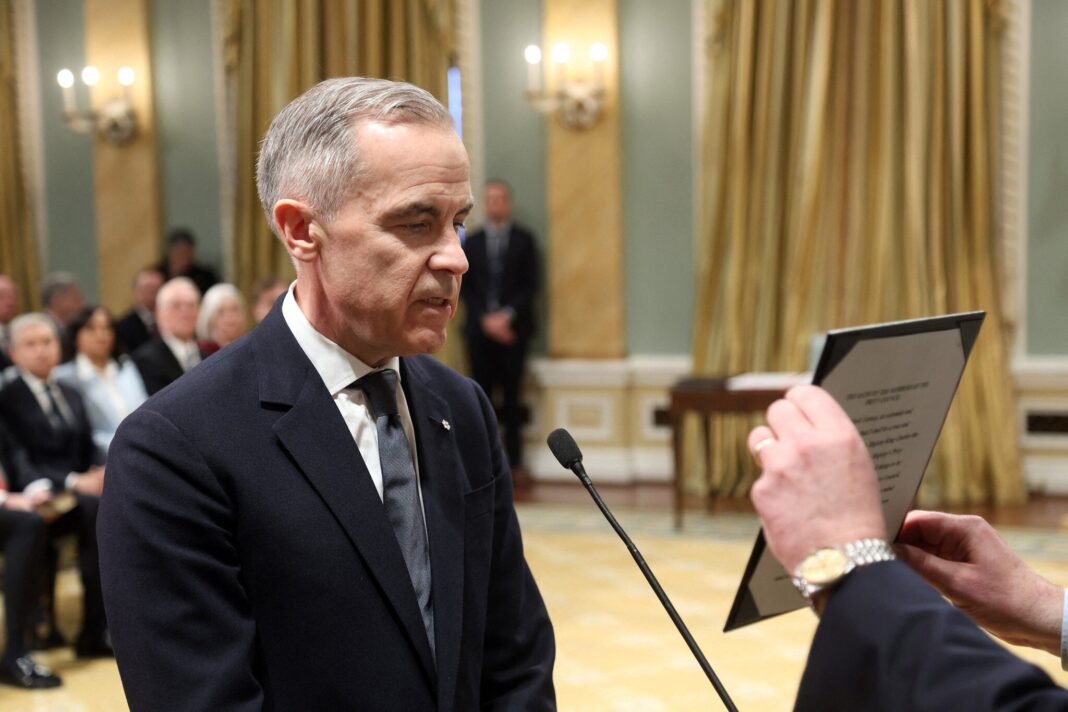

Mark Carney, a prominent banker and economist, is Canada’s 24th Prime Minister. He leads a government focused on uniting Canadians, safeguarding Canada’s sovereignty, and building a strong economy among G7 nations. Learn more about his life and work on edmonton-yes.com.
Early Life and Education
Born in Fort Smith, Mark Carney spent his entire childhood in Edmonton. His parents instilled a strong work ethic in him from a young age. His father, Bob, worked for the Alberta government in the Department of Indian Affairs and Northern Development before becoming a professor of education history at the University of Alberta. In 1980, Bob ran as a Liberal Party candidate for Edmonton—Strathcona in the federal election, finishing second. Mark’s mother, Verlie, was a homemaker who later earned a degree and became a teacher.
Mark was the third of four children. His dedication to hard work was evident early on. To earn pocket money, he attended St. Francis Xavier High School while also delivering newspapers. In 1983, after graduating, Mark enrolled at Harvard University, where he earned a Bachelor’s degree in Economics in 1988, followed by a Master’s.
In numerous interviews, Carney’s university professors described him as a well-rounded student who quickly grasped new approaches, perspectives, and challenges. These skills likely proved invaluable in guiding Canada through turbulent times.
Initially, Mark planned to study English literature and mathematics. However, attending lectures by Canadian economist John Kenneth Galbraith sparked his interest in economics. After graduating from Harvard, Carney worked for the international financial firm Goldman Sachs, aiming to pay off his substantial student loan debt. In 1991, he returned to Oxford University, where he earned a Master’s and a Doctorate in Economics. He completed his DPhil in 1995, writing a dissertation that explored whether domestic competition could make an economy more competitive nationally. This topic was, and remains, highly relevant as Canada strives to simplify internal trade amid American tariffs. Carney then rejoined Goldman Sachs as head of sovereign risk for Europe and Africa.
A Career Rooted in Finance
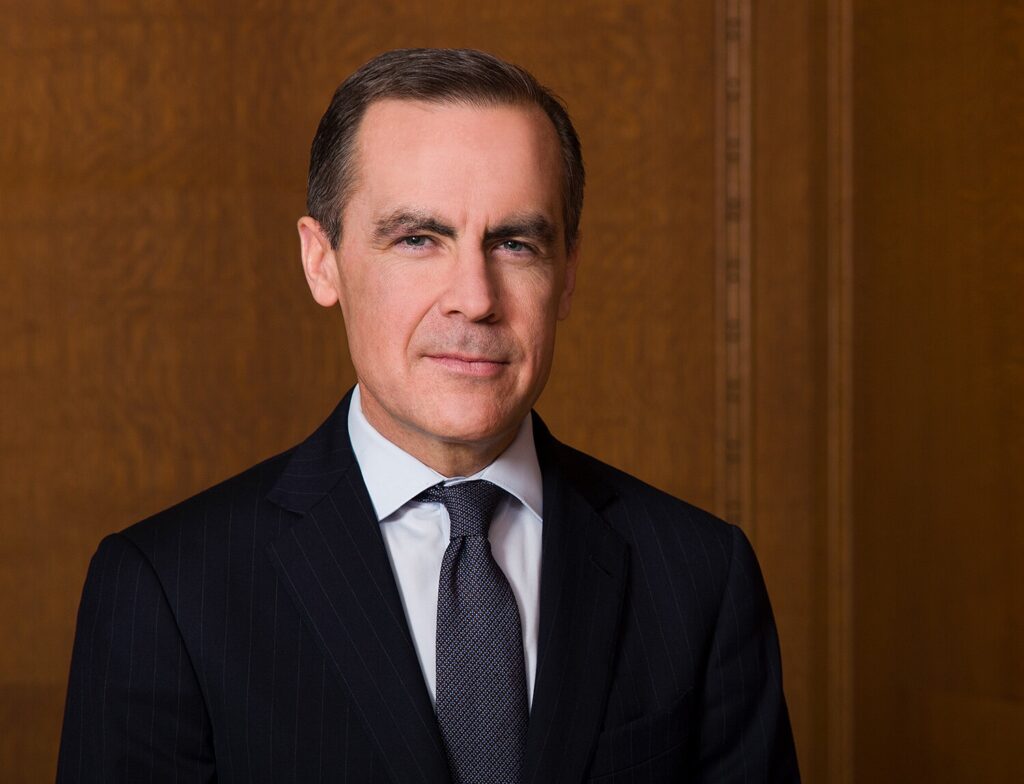
Carney began his career in finance before transitioning to public service. In 2003, he was appointed Deputy Governor of the Bank of Canada. He soon became the Senior Associate Deputy Minister at the Department of Finance. In 2007, just before the global market collapse that plunged the country into a deep recession, Carney became the Governor of the Bank of Canada. His leadership of the central bank is widely praised for helping Canada navigate the worst effects of the crisis. Carney implemented a series of measures in response to the downturn, including lowering interest rates to historic lows and guaranteeing they would remain unchanged for at least a year.
While central bankers are known for their caution, Mark openly declared his intention to keep interest rates low for at least a year after their sharp reduction. This move helped businesses continue to invest even after markets crashed. In 2009, the British newspaper “Financial Times” named Mark one of 50 international figures shaping the path forward. In 2010, “Time” magazine included him in its list of the 100 most influential people in the world. Overall, during his tenure at the Bank of Canada, Carney gained widespread recognition and significant public standing.
Mark continued to apply a similar approach in his work, and he was soon invited to London to lead the Bank of England. Analysts assert that it was Carney who modernized the Bank of England. In 2015, he reduced the number of interest rate meetings from 12 to 8 per year and began publishing minutes alongside interest rate decision announcements. Notably, when Mark took office, rates were fixed at a historically low level, but he introduced a policy of forward guidance. Under this policy, the bank aimed to further support the economy and stimulate lending by promising not to raise rates until the unemployment rate fell below 7%.
Unlike his predecessors, who typically maintained a very reserved demeanor, Carney was not silent and made several controversial statements before two major constitutional referendums. In 2014, he warned that an independent Scotland would have to cede some powers to the United Kingdom if it wished to continue using the pound sterling. Before the Brexit referendum, Mark noted that voting to leave the EU could trigger another recession. However, no one heeded his words, and ultimately, after the vote to leave, Cameron resigned as Prime Minister, and the pound sterling plummeted. Despite the difficulties, Carney assured the country that the financial system would continue to function as usual.
Soon after, the Bank of England cut interest rates from 0.5% to 0.25% and restarted its quantitative easing program to support the economy.
From 2011 to 2018, Carney chaired the Financial Stability Board, which coordinated the work of regulators worldwide. Mark Carney is also known as a proponent of environmental sustainability. In 2019, he became the UN Special Envoy on Climate Action and Finance, and in 2021, he founded the Glasgow Financial Alliance for Net Zero – a coalition of banks and financial institutions working to combat climate change.
Additionally, Carney has advocated for limiting current immigration targets to avoid overburdening Canada’s housing and healthcare systems.
Leader of the Liberal Party and Prime Minister of Canada
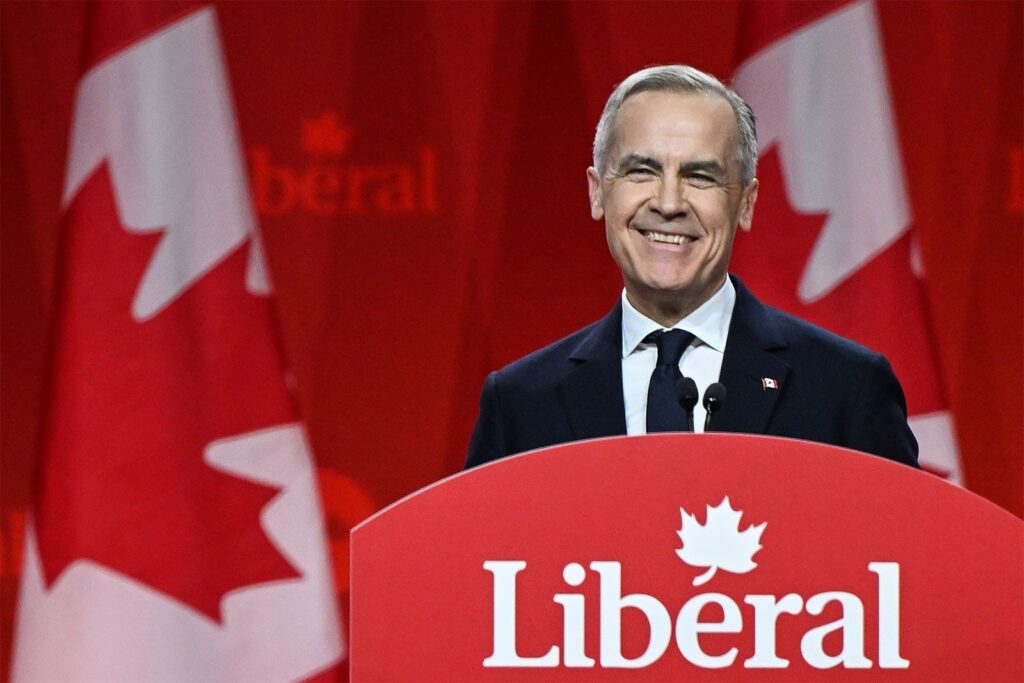
In January 2025, Carney made his first foray into politics, announcing his intention to run for the leadership of the Liberal Party of Canada. On March 9, 2025, he was elected on the first ballot, succeeding Justin Trudeau as party leader and Prime Minister. On March 14, 2025, Carney was sworn in as the new leader of the Liberal Party and Prime Minister – the first Canadian Prime Minister in history who had not previously served as a Member of Parliament.
In his capacity, Mark repealed the consumer carbon tax. He then announced new investments of $420 million to protect Canada’s sovereignty in the Arctic. Priorities for the Carney government include:
- Enhancing Canada’s economic resilience by removing interprovincial trade barriers.
- Implementing tax reform and accelerating the construction of new homes across the country.
- Hiring 1,000 new border service officers and 1,000 officers for the Royal Canadian Mounted Police.
- Reducing immigration to a sustainable level by lowering the number of temporary workers and international students.
Personal Life and Interesting Facts
Mark Carney met his wife, Diana Fox, while studying at Oxford University. She played on Oxford’s women’s hockey team and became an economist specializing in third-world development. The couple married in 1994.
As for interesting facts, it’s worth noting:
- The politician has Irish roots and is a practicing Catholic.
- In 2015, “The Tablet” newspaper named Mark the most influential Catholic in Britain.
- Carney is a fan of the Edmonton Oilers hockey team.
As of 2025, Mark Carney continues to serve as Prime Minister, leading Canada towards development and prosperity.