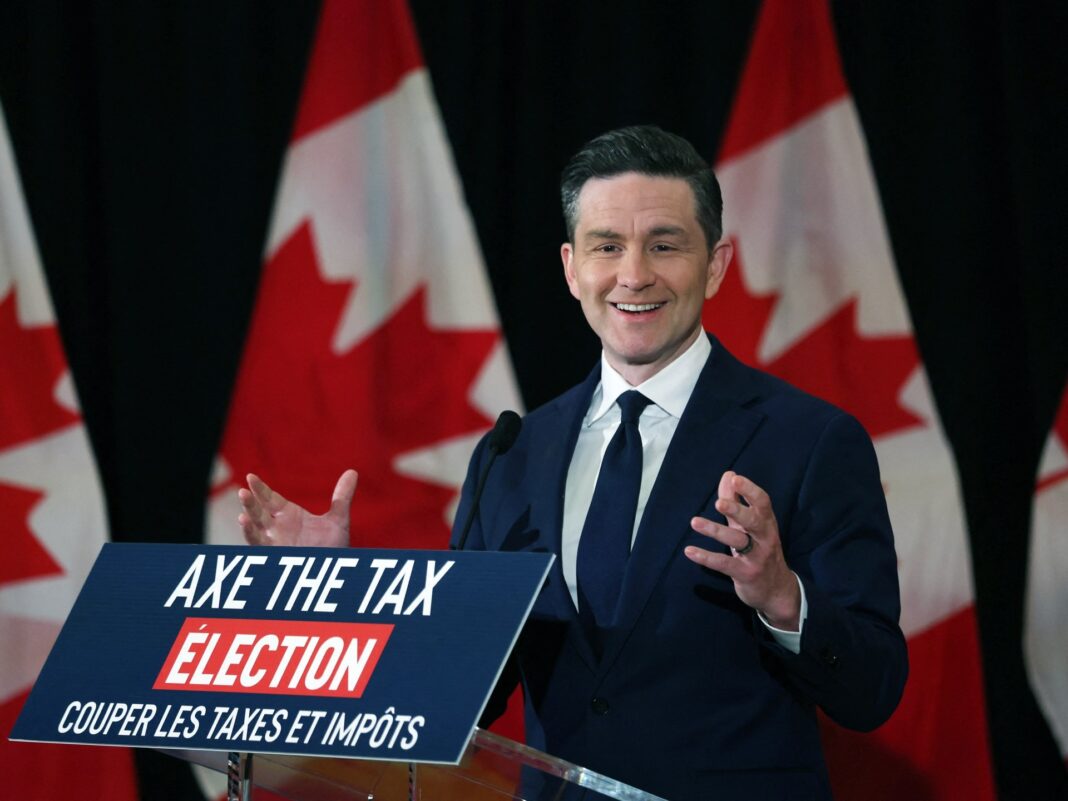

Pierre Poilievre, a prominent Canadian politician, serves as a Member of Parliament and the Leader of the Official Opposition. He’s also widely known as a fierce critic of Canadian Prime Minister Justin Trudeau’s government, according to edmonton-yes.com.
From Childhood to Political Life

Born in Calgary on June 3, 1979, Pierre’s mother, Jacqueline, was just 16 when he arrived. Given the circumstances, she made the difficult decision to place him for adoption. He was adopted by Donald and Marlene Poilievre, a family of teachers. Pierre spent his childhood in the Calgary neighbourhood of Shaughnessy. During his school years, he was passionate about hockey, high jump, and wrestling. As he entered his teenage years, however, his interest shifted towards politics. While attending Henry Wise Wood High School, Poilievre was an active member of theSERVATIVE Club. At just 17, he attended a Reform Party convention, a significant step into the political arena. When he turned 20, he had his first reunion with his biological mother, who was working as a nurse in North Carolina at the time.
A Rising Political Career
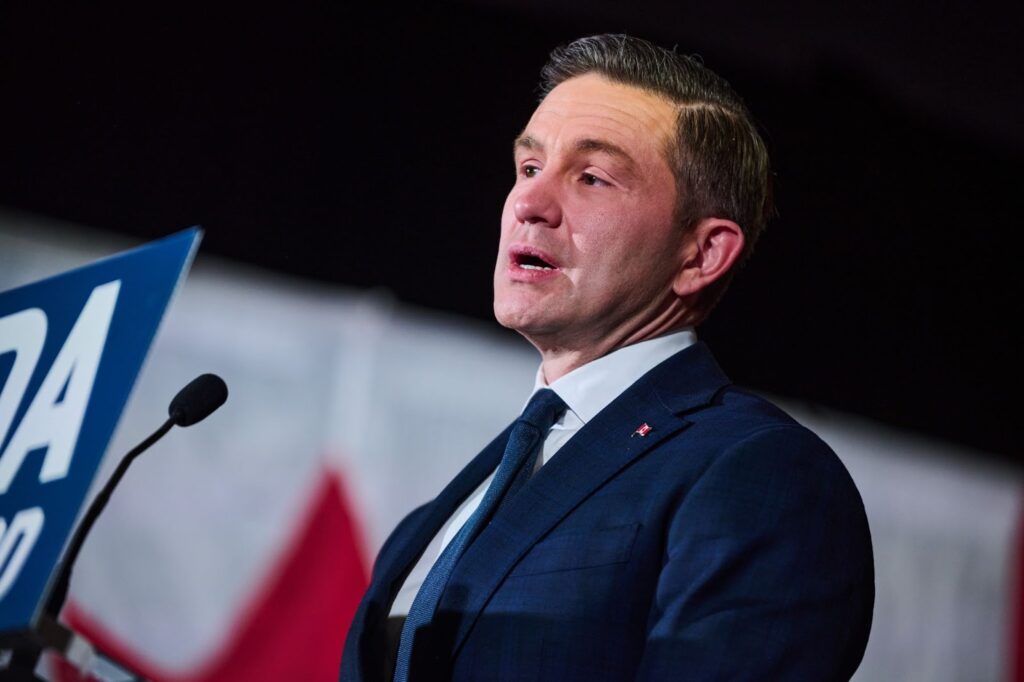
In 2008, Poilievre earned a Bachelor of Arts degree in International Relations from the University of Calgary. During his studies, he became the vice-president of the Reform Club and was also one of ten finalists to win $10,000 in an essay competition. His 2,500-word essay, titled “Building Canada through Freedom,” argued that freedom is the cornerstone of individual prosperity for Canadians and democracy in Canada. These ideas were heavily influenced by his reading of Milton Friedman’s “Capitalism and Freedom,” a book Poilievre credits with significantly shaping his political thinking.
Notably, in 2000, when the Reform Party transformed into the Canadian Alliance, Poilievre volunteered as a fundraiser for Stockwell Day’s successful leadership campaign. He then accepted Day’s offer to become one of his legislative assistants in Ottawa. Months later, Liberal Prime Minister Paul Martin called an election.
Poilievre ran against the two-term incumbent Minister of Defence, David Pratt. Despite expecting a defeat, he managed to win by a margin of 3,700 votes. At 25 years old, he became the youngest Member of Parliament. He quickly gained national attention for his articulate speeches on policy, often expressing views contrary to his colleagues. Pierre was frequently involved in debates with fellow committee members and even made an inappropriate gesture in the House of Commons, for which he later offered a lengthy apology.
Poilievre defended his behaviour by stating that he believes the ideas he works on are worth fighting for, and that sometimes involves highlighting the shortcomings of alternative options. In 2006, parliamentary staff recognized Poilievre as the hardest-working MP.
In the 2006 federal election, Pierre was re-elected, securing 55% of the votes in his riding. The Conservative Party formed a minority government, and the then-Prime Minister appointed Poilievre as the Parliamentary Secretary to the President of the Treasury Board. His most significant work during this time was assisting in the development and passage of the federal accountability act, which was signed into law in 2006.
In June 2008, Poilievre was expected to apologize to Indigenous peoples for the government’s role in residential schools. However, he made dismissive comments about compensation payments, stating that he believed instilling values of hard work, independence, and self-reliance was a better long-term solution, as “large sums of money” wouldn’t help in this situation. He publicly apologized the following day.
Active Member of Parliament and Cabinet Minister
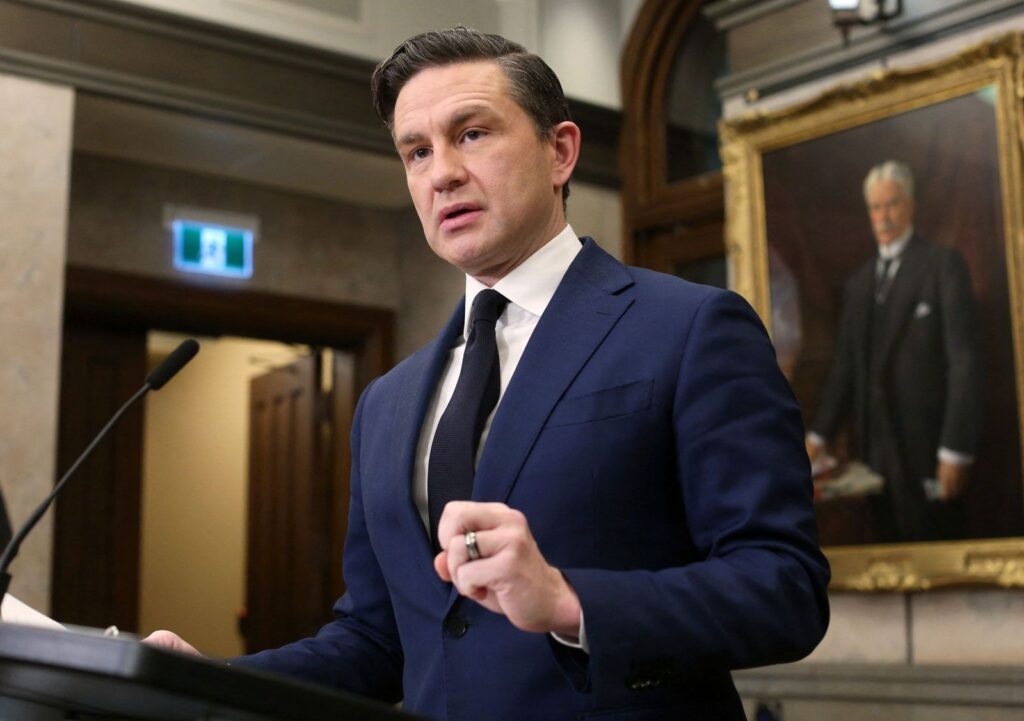
In the 2008 federal election in Alberta, Pierre successfully retained his seat with 55.8% of the votes. That fall, he was appointed Parliamentary Secretary to the Prime Minister.
In 2009, Liberal leader Michael Ignatieff and Prime Minister Stephen Harper agreed to create a working group to study reforms to the employment insurance system. However, Poilievre’s reputation was so strong that his appointment to the group was widely seen as a clever move by Harper to sabotage its work.
In 2012, Poilievre advocated for making union membership and dues optional for federal civil servants. To critics who claimed he was trying to dismantle unions, he offered a sharp retort. Poilievre believed this would strengthen workers’ rights and freedom. This ultimately led to the adoption of Bills C-377 and C-525. These two anti-union laws were only repealed in 2017 with the passage of Bill C-4.
A significant cabinet shuffle occurred in 2013, at which point Poilievre was appointed Minister of State for Democratic Reform. In the winter of 2014, he introduced Bill C-23, known as the Fair Elections Act. The opposition argued that this would make voting more difficult. However, after intense parliamentary debates and numerous amendments, Bill C-23 was passed in May.
In 2015, Poilievre was promoted to Minister of Employment and Social Development. At the time, he promised that parents of children under six would receive $420 per child, and those with children aged six to seventeen would receive $520 per child. With elections looming, critics dismissed this statement as blatant political manipulation.
The Path to Leadership
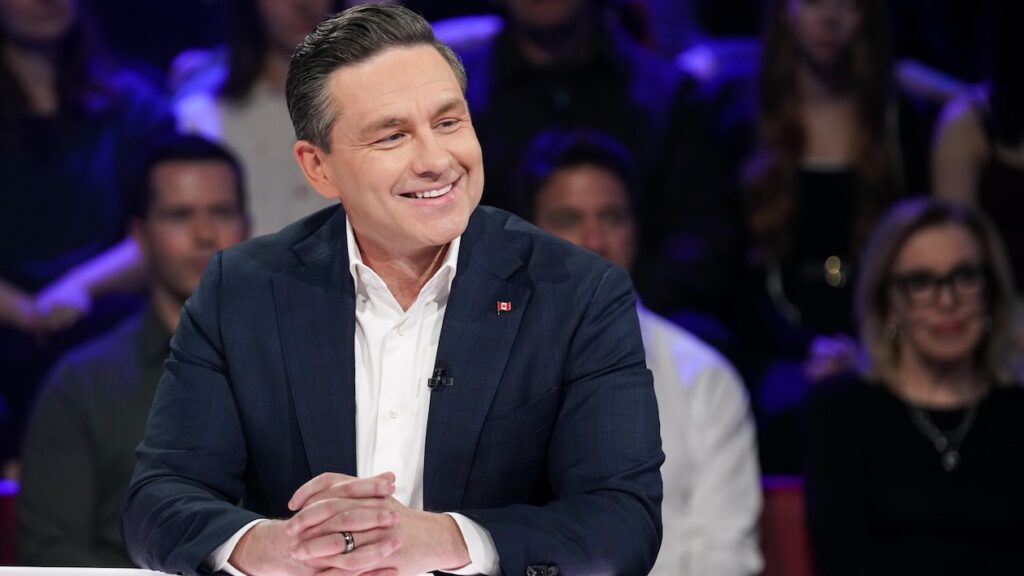
Throughout his leadership campaign, Pierre Poilievre consistently stated he wasn’t running for Conservative Party leader, but for Prime Minister, to bring freedom to Canadians. In early 2022, the “Freedom Convoy” temporarily blocked a border crossing between Canada and the U.S. in Alberta and then occupied downtown Ottawa from January 29 to February 21. Activists called for an end to COVID-19 vaccine mandates and demanded Prime Minister Justin Trudeau’s resignation. Pierre publicly supported this protest. On January 28, he met with protest leaders and declared that they represented “people who want to stand up for their freedom.” Following this, Poilievre’s popularity surged. On September 10, 2022, Pierre became the leader of the Conservative Party, securing a pre-determined victory in the first round with 68.2% of the votes. He then promised Canadians affected by the unstable post-pandemic economy that he would do everything to improve the situation.
In March 2023, when Canadian Prime Minister Mark Carney announced a long-term election for April 28, opinion polls showed the Liberals and Conservatives neck and neck. However, momentum continued to favour the revitalized Liberals. Ultimately, the Liberal Party won, while the Conservatives won the popular vote, continuing their role as the Official Opposition.
Despite setbacks, Pierre Poilievre remains undeterred. He actively criticizes the Trudeau government, and from 2025, Mark Carney’s administration. Furthermore, he champions his own initiatives, such as supporting cryptocurrencies and reducing government funding for media. Beyond politics, Poilievre is a devoted husband and father. In 2017, he married Anaida Galindo, and they soon welcomed two children: daughter Valentina and son Cruz. The family resides in Ottawa, where Pierre also owns investment properties.