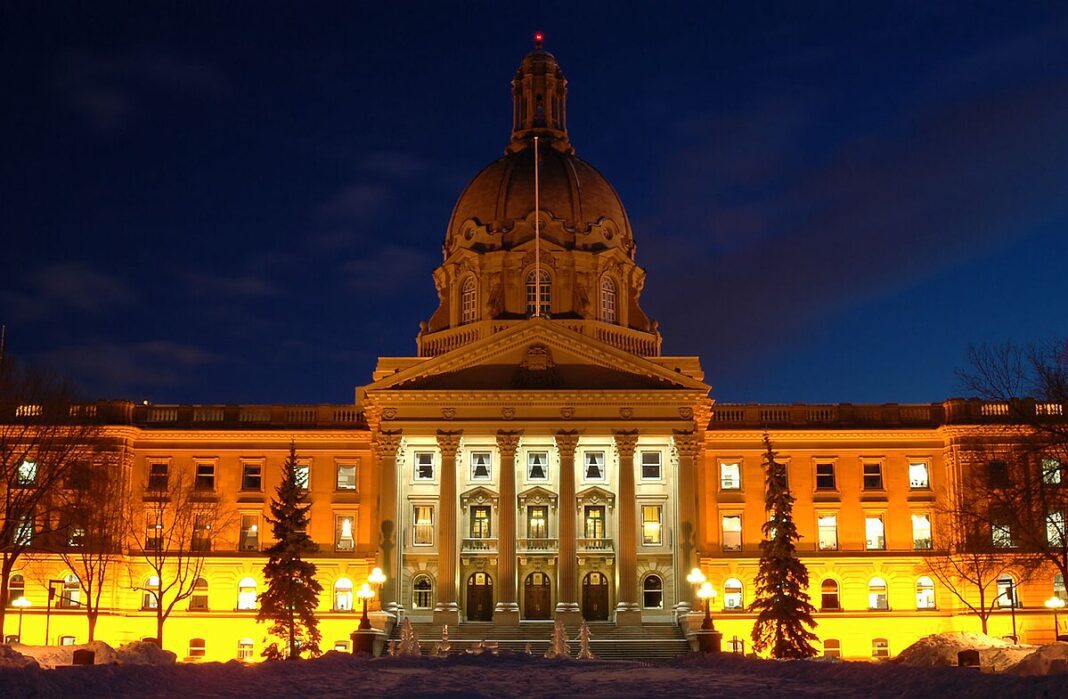

Every province has its own political history. Alberta is no exception to the rule. We’ll talk in more detail about how politics formed and developed here on edmonton-yes.
Fur Traders’ District
Very few people know that Alberta was named after Princess Louise Caroline Alberta, who was the daughter of the great Queen Victoria. Initially, Alberta was considered a district of the North-West Territories, and only later did it officially become a province.
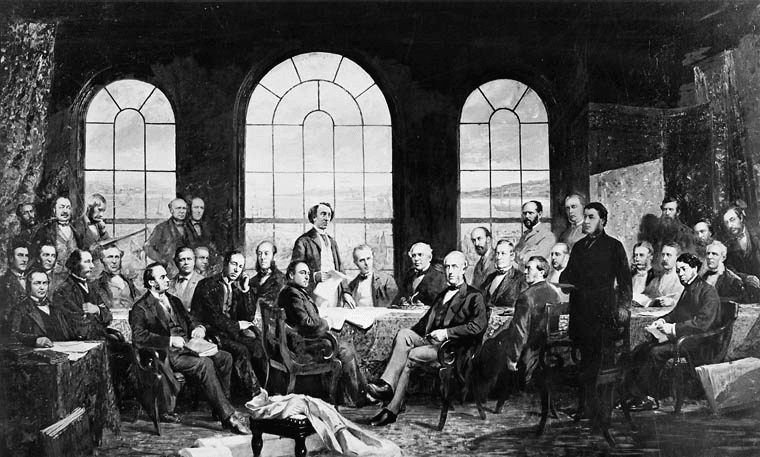
In the first half of the 19th century, most settlers in the western part of the country were Indigenous Peoples and Métis, who were engaged in the fur trade. Consequently, the Hudson’s Bay and North-West companies became the sources of power in the West. Gradually, central Canada insisted that the western lands be integrated into Upper Canada. Only Confederation was able to establish constitutional boundaries, which brought the West into the newly formed federation.
One of the first actions of the newly created Dominion government was to negotiate with Hudson’s Bay over the transfer of Rupert’s Land and the North-Western Territory to Canada. This process began in 1868 and ended in 1869.
As part of preparing for the transfer, Canada adopted the Act for the Temporary Government of Rupert’s Land and the North-Western Territories after their union. This law laid out what was called a temporary governance scheme, serving as the foundation for the government of the North-West Territories until 1905.
Territorial Government
After acquiring these lands, Canada gained control over a vast territory and began developing and passing important regulations and laws. The act establishing the territorial government provided for the appointment of a lieutenant-governor responsible for local governance, taking instructions from Ottawa. According to the law, a council of 15 members had to be formed, assisting the lieutenant-governor with various administrative issues. Consequently, John Macdonald chose Joseph Howe as a cabinet member and put him in charge of the general administration of North-Western affairs. William McDougall, who was then serving as Minister of Public Works, was appointed lieutenant-governor.
In 1869, McDougall, a proponent of expansion, visited Winnipeg to form a territorial council. That trip became the catalyst for the Red River Rebellion and the creation of Manitoba. The aftermath of the rebellion negatively affected the rest of the North-West.
The North-West Territories Act of 1875 introduced a separate lieutenant-governor and a council. When the number of elected council members reached 21, the council would be dissolved. In 1883, the Edmonton district became an electoral district, and Frank Oliver was elected as Alberta’s first representative.
The Dominion Lands Act of 1872 allowed settlers to claim a quarter-section of land for free, which gradually expanded the western territories. In the mid-1870s, Fort Edmonton and Fort Calgary were established by the North-West Mounted Police. It’s worth noting that by 1881, Alberta was home to about 6,000 Indigenous Peoples and 15,000 White and Métis inhabitants.
Construction of the Canadian Pacific Railway and the availability of land triggered a wave of immigration. Commercial ranching, especially in southern Alberta, soon proved to be economically viable. By 1884, 47 ranches in Ottawa leased 1,785,690 acres of land.
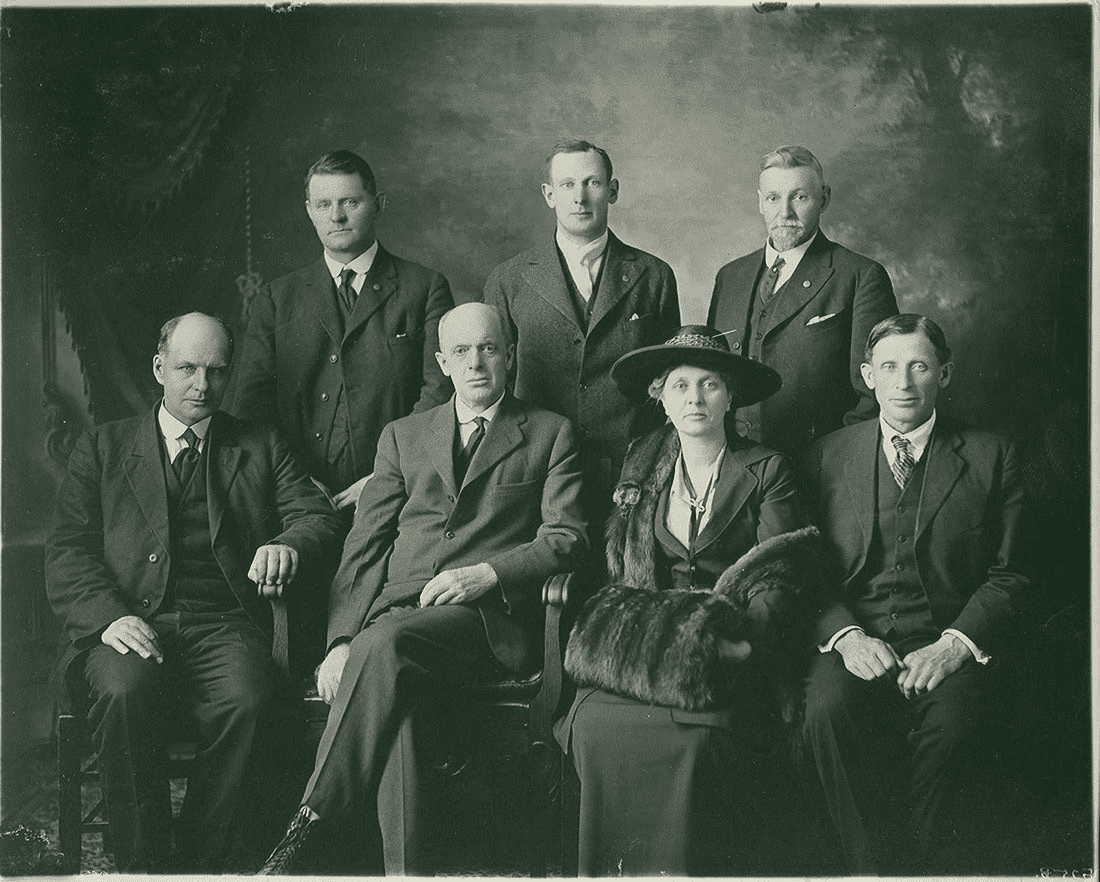
By 1888, the Legislative Assembly of the North-West Territories had taken shape. That same year, 22 members were elected, seven of whom were natives of Alberta, including F. Haultain, who would soon become premier.
In 1890, work began on routes to connect Calgary and Edmonton. From 1885 to 1897, there was a power struggle between the North-West Territorial Council and Legislative Assembly on one side and Ottawa on the other, over budgetary control. In 1891, the Dominion Parliament relented and amended the law, allowing the Legislative Assembly to pass ordinances on almost all matters. In 1891, F. Haultain was named Premier of Alberta.
Becoming a Province
In 1883, a Canadian Pacific Railway crew, drilling for water 40 miles west of Medicine Hat, discovered natural gas. Seven years later, the first commercial well was opened, supplying the town of Medicine Hat with water. In the Crowsnest Pass area, coal was being mined, and numerous small sawmills sprang up. The economic growth from selling Alberta’s abundant natural resources played a significant role in turning it into a province.
Successive members of the North-West Legislative Assembly continually urged the Ottawa government to grant provincial status to the West. In 1904, something remarkable happened: Wilfrid Laurier agreed, and in 1905, the House of Commons passed the Alberta Act and the Saskatchewan Act.
Another issue of interest in the West regarding provincial formation was the choice of its capital. Calgary and Edmonton emerged as frontrunners. Calgary had the advantage of a larger population and stronger economic stability. In 1904, a Conservative member was elected here. Edmonton also vied for the capital title, benefiting from the election of two very influential Liberals, Oliver and Talbot. Notably, Edmonton was named the temporary capital, pending the decision of the 25 members of the Alberta Legislature. During that time, one of Edmonton’s leading Liberal lawyers, Rutherford, was appointed premier until Ottawa finished dividing Alberta into electoral districts.
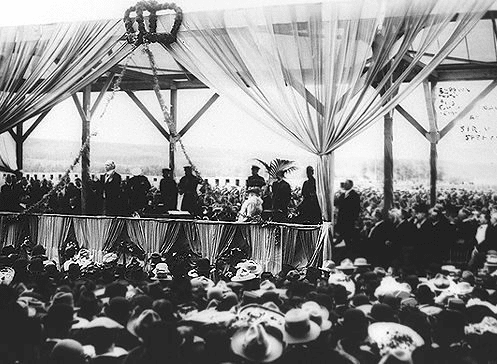
The first provincial election in Alberta was held on November 9, 1905, in which the Liberal Party finished with 23 seats out of 25. On March 15, 1906, George Bulyea addressed a crowd of four thousand in Edmonton, officially opening the first session of the Alberta Legislative Assembly, where participants tackled a host of issues— from setting speed limits for motor vehicles to establishing the University of Alberta. It was also then that Edmonton was officially chosen as the provincial capital, and the site for the new Legislative Building was selected on the banks of the North Saskatchewan River, overlooking Fort Edmonton.
In 1909, Rutherford embarked on a campaign to expand the railway system. His government promised over 25 million dollars to various railway companies, which built 1,761 miles of track. With support from the newly formed United Farmers of Alberta, Rutherford was re-elected as president. Bennett was selected to lead the opposition. In 1910, Rutherford resigned and was replaced by Arthur Sifton.
When the First World War began, Alberta experienced economic and political change. During this period, women began to play a more active role in public affairs. In 1916, they were granted the right to vote. After a non-partisan election, Arthur Sifton resigned and joined the Union government in Ottawa, while Charles Stewart took over leadership of the Liberal Party.
The 1920s were turbulent, marked by an oil boom. In 1922, radio arrived, and William Aberhart began his weekly Sunday radio program. He soon entered politics under the Social Credit banner. In 1935, Aberhart led the Social Credit Party to victory. He remained at the party’s helm until his death. In 1943, Ernest Manning succeeded him as party leader and premier. Manning oversaw the discovery of oil near Leduc in 1947, which spurred the development of energy infrastructure.
Before long, oil provided Premier Manning with the capital needed to meet the needs of the province’s growing population. Facilities for seniors, hospitals, and schools were built at a rapid pace. Manning’s party went on to win six consecutive election victories.
In 1971, E. Lougheed became leader of the Progressive Conservative Party and the province’s premier. Over his 15-year tenure, Alberta rose to prominence in national affairs. Lougheed helped establish a Heritage Fund and introduced important social and health programs. In 1985, Lougheed resigned and was succeeded by Don Getty. In the 1986 provincial election, a strong opposition was elected, with 16 New Democrats and 4 Liberals.
From all of the above, it’s clear that Alberta’s provincial politics have historically been characterized by governing parties that secured the majority of votes and stayed in power for extended periods. The right political decisions and actions have led Alberta toward progress.
Sources: