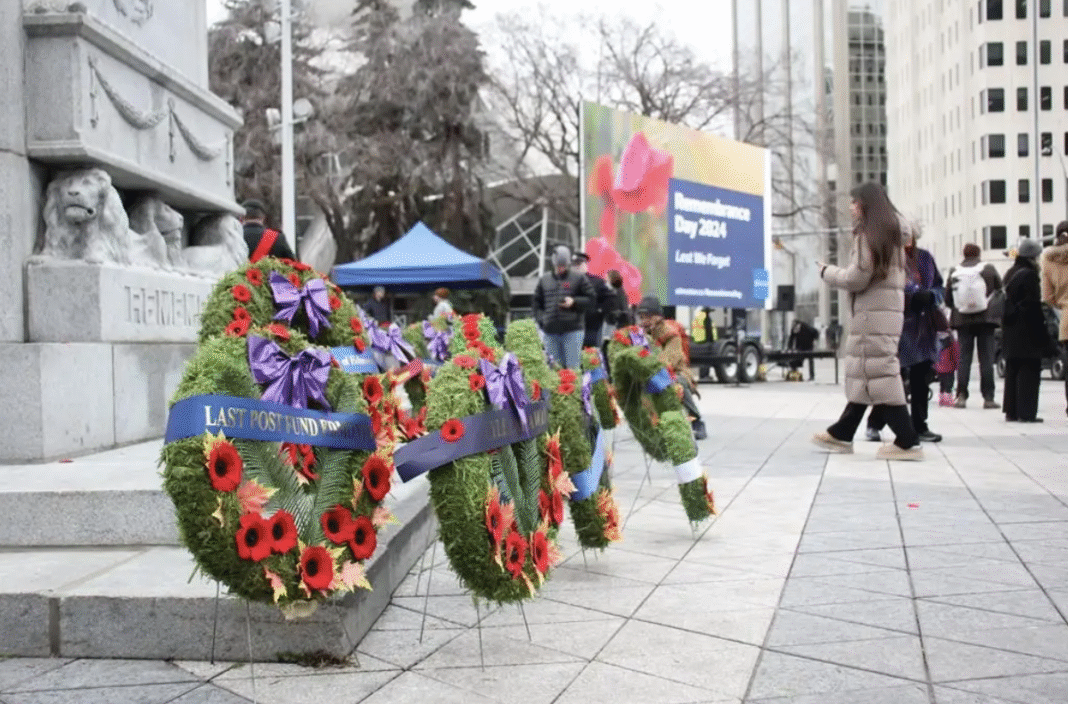

Edmonton is a city that honours those who fought for freedom and peace worldwide. Memorials across the city serve as powerful reminders of heroism, loss, and the enduring importance of peace. Here are some of Edmonton’s most significant memorials. Learn more at edmonton-yes.com.
The Edmonton Cenotaph
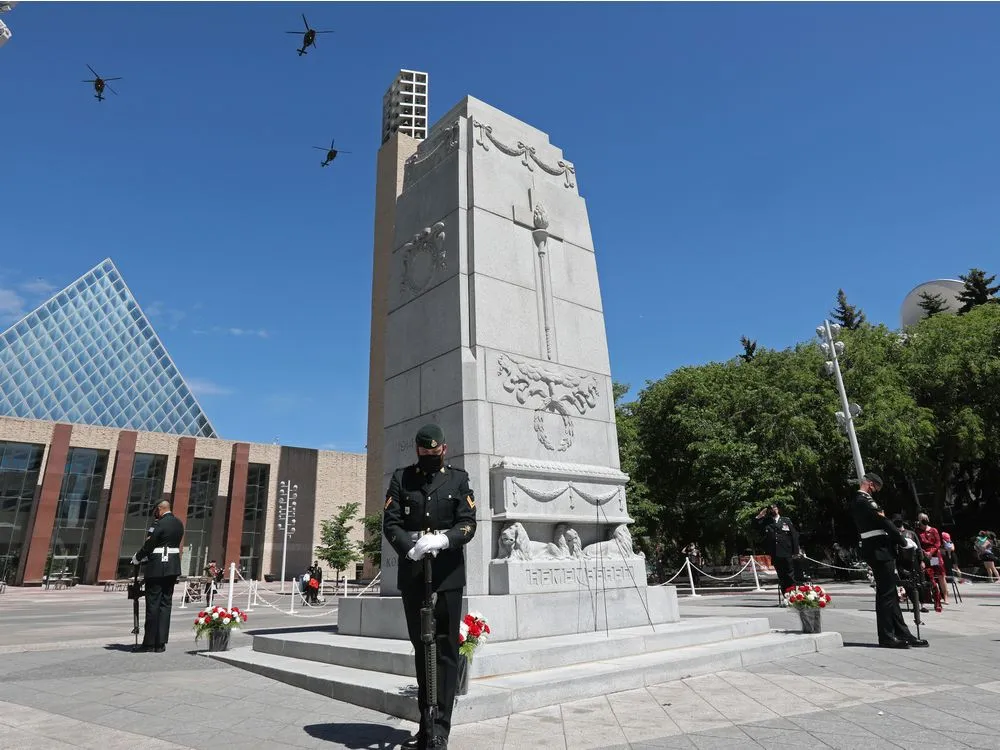
The Edmonton Cenotaph is located in City Hall Square. It was erected to commemorate those who lost their lives in the First World War, the Second World War, the Korean War, and the war in Afghanistan. The cenotaph was originally unveiled in 1936.
Initially situated at the corner of 102nd Street and 100th Avenue, it was moved to City Hall Square in 1978. The cenotaph is built from concrete, steel, and marble imported from British Columbia, with the entire structure weighing over 100 tonnes. It stands 23 feet tall on an 18-square-foot base. The Edmonton Cenotaph shares key design features with other cenotaphs from across the former British Empire and is rich with decorative, symbolic elements.
Over the years, the cenotaph has undergone several re-dedication ceremonies, with new engravings added to honour the men and women who died in the Second World War (unveiled in 1946), the Korean War (unveiled in 1956), and various Canadian peacekeeping missions.
The most recent re-dedication took place in 2021, marking the 20th anniversary of Canada’s entry into the war in Afghanistan. During the ceremony, local politicians spoke about the physical and mental trauma that veterans of this war continue to endure. Over the 12 years of Canada’s mission in Afghanistan, more than 40,000 Canadian soldiers, sailors, and aviators served there. Thousands were wounded, and 158 service members were killed.
The cenotaph is the focal point for the city’s annual Remembrance Day ceremonies.
Edmonton Cemetery
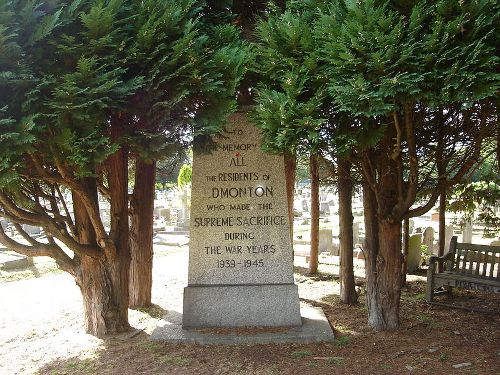
The Edmonton Cemetery is the final resting place for service members from both World Wars. Most of the First World War graves belong to military personnel who passed away at the North Middlesex Hospital and later at the Edmonton Military Hospital. Almost all are buried in the military plot behind the chapel.
The number of Second World War burials is significantly smaller. They are located in a separate plot, where a small memorial in the corner honours six service members who could not be identified. In total, the cemetery contains the graves of 156 casualties from the Second World War.
The cemetery also features a screen wall inscribed with the names of 39 casualties buried in Tottenham Park Cemetery, whose graves could no longer be maintained.
A cemetery itself can be a powerful historical monument, reminding us of sacrifice and loss. Commemorative events are held here regularly, especially on Remembrance Day, when citizens gather to honour veterans and their service.
Beverly Memorial Cenotaph
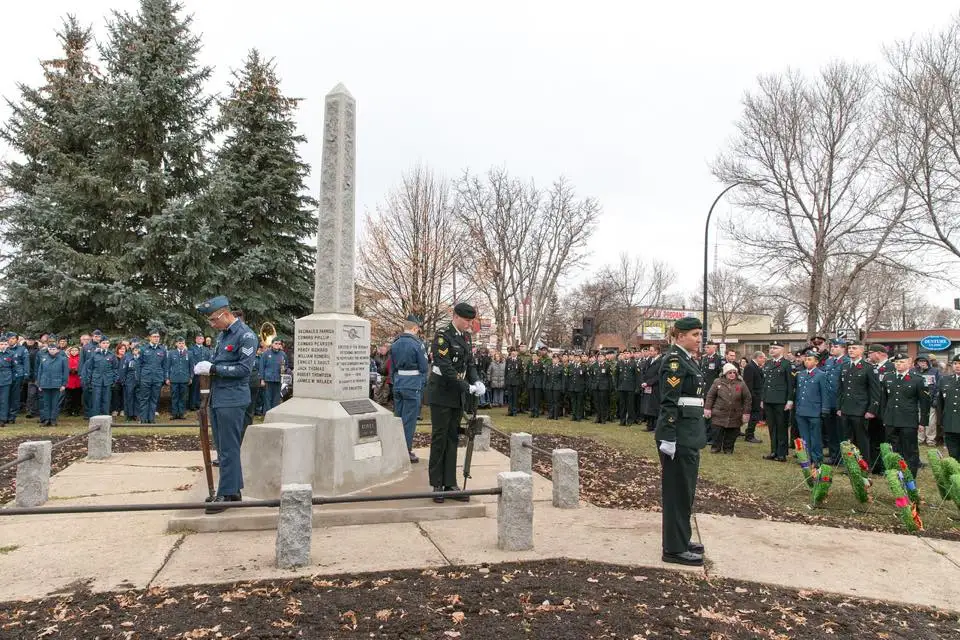
Another important cenotaph is located in the Beverly neighbourhood. It was built in 1920 by soldiers returning from the First World War. Before the Royal Canadian Legion was formed, these veterans established the Beverly Veterans’ Institute.
This cenotaph is considered Alberta’s oldest modern military monument. It was dedicated to the 170 service members from Beverly, which was then a separate mining town with a population of just 1,000. The names of the 28 Beverly soldiers who died in the war are carved into its granite column. The monument and its parkland have been designated as a Municipal Historic Resource by the City of Edmonton.
The area has undergone significant renovations, including the addition of an open park space, new plaques, new sidewalks, and improved lighting, which has made the cenotaph grounds safer. This was made possible by the Rotary Club of Edmonton Northeast through their “Legacy Project.”
Although the memorial is primarily dedicated to the First World War, it also includes a plaque with the names of five Beverly residents who died between 1939 and 1945. Additionally, brass plaques commemorate all conflicts in which Canada has been involved, up to and including the mission in Afghanistan.
Every year on Remembrance Day, the site hosts solemn ceremonies attended by city officials, veterans’ organizations, schoolchildren, and local residents. It’s a wonderful example of how even a small community can preserve the memory of those who gave their lives for a peaceful future.
Alberta Holocaust Memorial
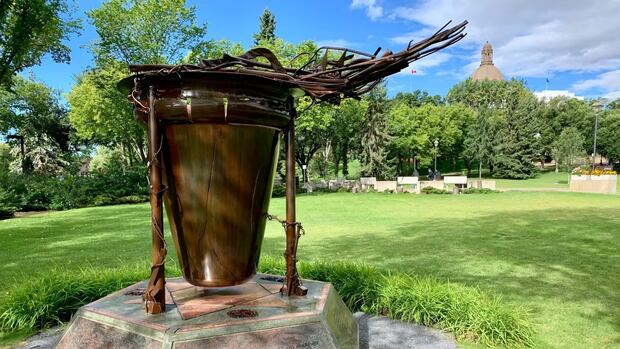
The Alberta Legislature Grounds are home to several fascinating artworks and important memorials. Among them is the Holocaust Memorial, located on the southeast corner of the grounds. The sculpture, a work by artist Susan Owen Kagan, depicts a fractured Kiddush cup entwined with barbed wire at its base.
Several inscriptions run along the sculpture’s base. One states that the Holocaust is a symbol of a darkness that must never be repeated, while others speak to the critical importance of remembering this horrific event.
The sculpture is titled “The Vessel of Souls.” It is dedicated to people who “were poets who never wrote; artists who never dreamed; teachers who never taught; students who never learned; and sons and daughters who never became fathers and mothers.”
Commissioned by the Jewish Federation of Edmonton, artist Susan Owen Kagan completed the sculpture in 2003. Kagan, a well-known figure in Edmonton’s Jewish community, described the project as a complex challenge, as she needed to create a meaningful work of art that also met the city’s building codes. Her goal was for the sculpture to provoke questions, reflection, and an emotional response.
Kagan studied at the Banff School of Fine Arts and earned a Bachelor of Fine Arts with distinction from the University of Alberta, where she focused on sculpture. The history of the Holocaust is deeply personal for her, as her father came to Canada as a young Jewish refugee from Nazi Germany.
“The Vessel of Souls” is a prayer cup, a symbol of spiritual unity and ancient traditions. Through her work, Kagan aimed to convey the importance of social responsibility. The cup is fractured and wrapped in steel strands that resemble barbed wire, yet it stands firm against the pressure.
The original design also included three curved walls to display the names of local survivors and three benches to form a circle around the sculpture. However, the decision was made to postpone these elements.
This memorial is a powerful space for quiet contemplation. One of its inscriptions reads: “When you stand here, be silent. When you leave here, be not silent.” The piece has become a vital part of Jewish Edmonton, serving as a poignant reminder of all who perished in the Holocaust, the devastation of the tragedy, and the trauma that still affects the community. The sculpture gives visitors a place to reflect, while moving them to ensure they never remain silent again.
As we can see, memorials take many forms, but they all share a common purpose: to preserve memory. They hold countless stories of courage and loss. Visiting these sites helps us recognize our own responsibility to safeguard peace in the modern world.