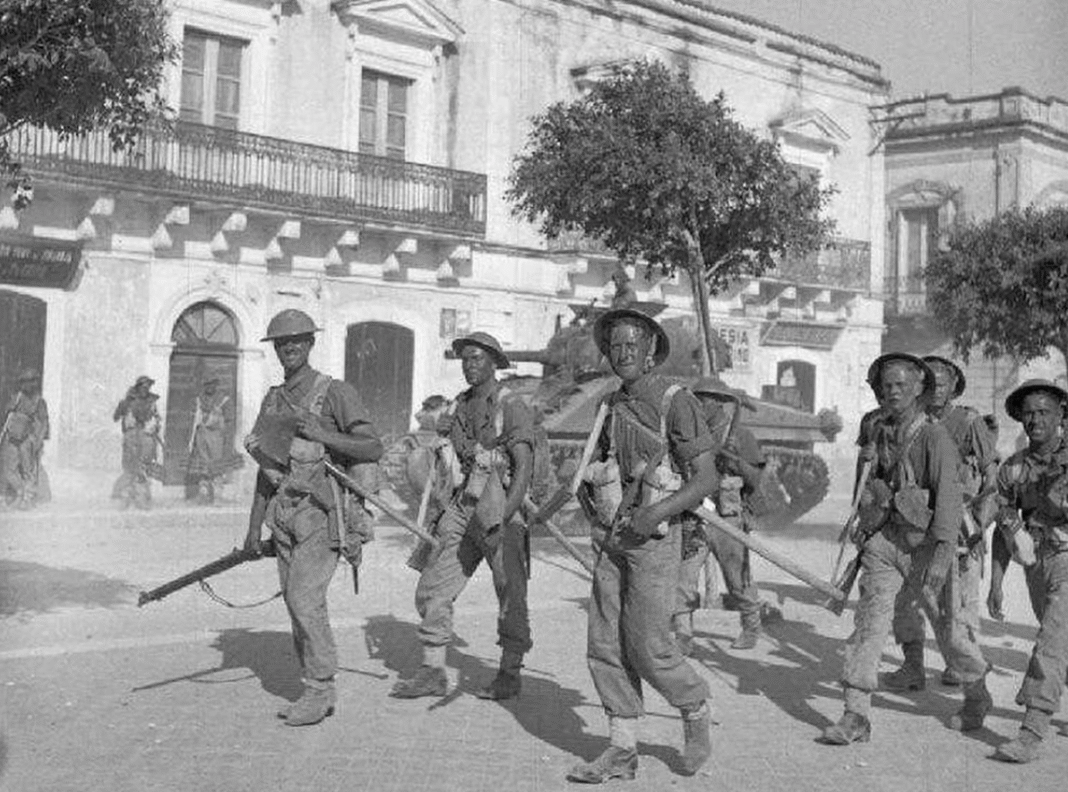

Edmonton played a hugely important role in World War II, despite being geographically distant from the European conflict. Brave Edmontonians were involved in major combat operations in Italy and France, while the city’s economy was fully mobilized to support the men and women on the front lines. In this edmonton-yes, feature, we’ll explore the pivotal battle fought by the Loyal Edmonton Regiment (LER) and how the community rallied behind its heroes.
The Battle of Ortona: Heroism of the Loyal Edmonton Regiment
The Loyal Edmonton Regiment (LER) is Edmonton’s premier military unit. The Regiment boasts a distinguished history, having served in the First World War, the Second World War, and numerous subsequent UN and NATO peacekeeping missions.
The Italian town of Ortona was strategically vital for the Germans, who dedicated significant resources to holding it. Adolf Hitler himself ordered his troops to “fight for every house and tree.” But the Loyal Edmonton Regiment had other plans.
On the morning of December 20, 1943, troops from the Loyal Edmonton Regiment and the Vancouver-based Seaforth Highlanders launched a fierce two-pronged assault on Ortona. They immediately encountered the stiff resistance of elite German paratroopers. The Germans had occupied the town and used powerful explosives to demolish buildings, filling the narrow streets with impenetrable rubble.
Despite the intense opposition, the ‘Loyal Eddies’ pushed forward approximately 3,000 metres. The Regiment sustained heavy casualties but managed to secure a crucial foothold on the town’s southern edge. By the second day, the soldiers were entrenched and preparing for brutal close-quarters urban combat.
During the fighting, the Canadian troops developed and perfected a deadly technique known as “mouse-holing.” Soldiers would enter a building, then use a beehive-shaped explosive charge to blow a hole directly through the interior wall into the next room. They would pass through the hole, tossing grenades ahead of them into enemy-occupied spaces. Simultaneously, they targeted anyone attempting to escape into the street. This relentless process allowed them to systematically clear and secure both sides of a street until an entire block was in their hands.
As no reinforcements arrived, the Edmontonians were spread thin, tasked with bolstering three other units. Three companies, each numbering around 60 personnel, were engaged in the deadly fighting.
On Christmas Eve, December 24, the Loyal Edmonton Regiment captured a house without realizing the Germans had booby-trapped it with a devastating explosive charge. The resulting blast killed 23 men. The bodies of the soldiers remained tragically buried under the wreckage for several days before their comrades could recover them.
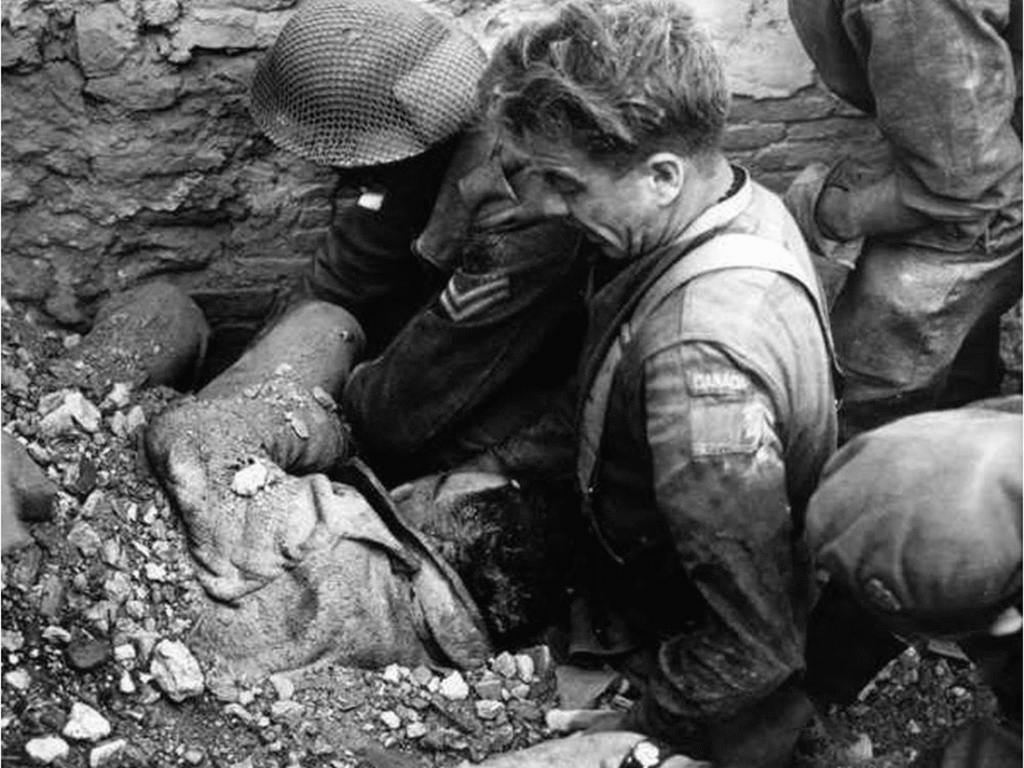
The Victory of the Valiant ‘Eddies’
The ‘Eddies’ didn’t wait long to retaliate. They quickly killed another 40 to 50 Germans using their aggressive “mouse-holing” technique. Over the next few days, the Regiment successfully pushed the Germans back to the very outskirts of Ortona. The Germans were unable to retrieve or bury their dead, leaving approximately 100 bodies scattered throughout the town.
Sixty-three loyal ‘Eddies’ made the ultimate sacrifice during this battle. In addition, approximately 1,314 civilians perished in what became known as “Canada’s Stalingrad.” Even during the war, local streets were renamed after Edmonton thoroughfares, such as Jasper Avenue and Saskatchewan Drive. Ortona maintains these street names today, and many residents still view the Edmontonians as their brave liberators.
The Home Front: What Was Happening Back in Edmonton
Edmonton supported its troops every step of the way. The city saw active mobilization to support the front lines and military units. Local residents organized persistent collections of funds, supplies, and provisions for those serving overseas. Women played an instrumental role in this national effort, stepping up to work more in the city’s factories and organizing essential support from home.
Crucially, the city became a vital transportation hub. Resources and troops were moved through Edmonton to other parts of Canada and beyond. The Edmonton Airport played an absolutely vital role, serving as a key stop on the famed Northwest Staging Route. About 3,000 people worked there, doing everything possible for the nation’s defence. The skies over Edmonton were literally black with planes—bombers, fighters, and transport aircraft, often heading to the Soviet Union with Lend-Lease aid, were a common sight above the city.
In summary, Edmontonians not only actively participated in key military operations overseas but also staunchly supported the front through dedicated volunteer efforts at home. The Loyal Edmonton Regiment demonstrated extraordinary heroism at the Battle of Ortona, and thanks to the tireless efforts of the community, the city cemented its role as a vital Canadian logistical and transportation centre during the war.