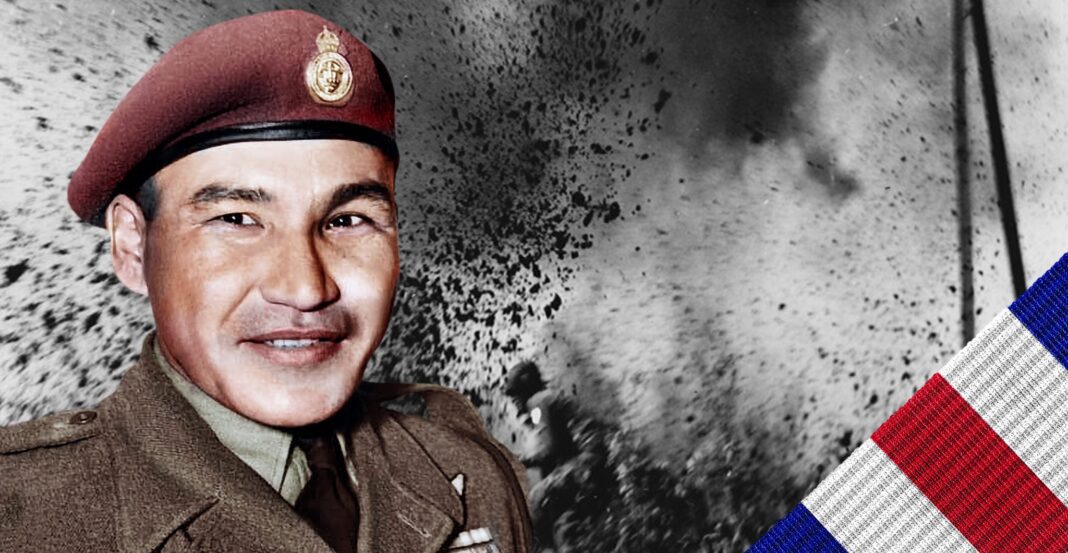

Thomas Prince is one of the most decorated Indigenous veterans of World War II. Beyond his significant military contributions, he is remembered as a staunch advocate for Indigenous rights, fighting for equality and recognition. Learn more about his life and legacy on edmonton-yes.com.
Childhood and Early Years
Thomas Prince was born in October 1915 in Petersfield, Manitoba, as one of eleven children of Henry and Arabella Prince, members of the Brokenhead Ojibway Nation. When he was five years old, his family moved to the Brokenhead Reserve (now known as the Brokenhead Ojibway Nation). Growing up in the reserve, Prince became an excellent marksman and tracker, skills he learned from his father, who was a hunter and trapper.
Prince applied multiple times to enlist in the Canadian Army, but he was repeatedly rejected. At the time, Indigenous people faced widespread discrimination, which likely played a role in his initial rejections. Eventually, at the start of World War II, he was finally accepted into the Canadian military.
Service in the “Devil’s Brigade”
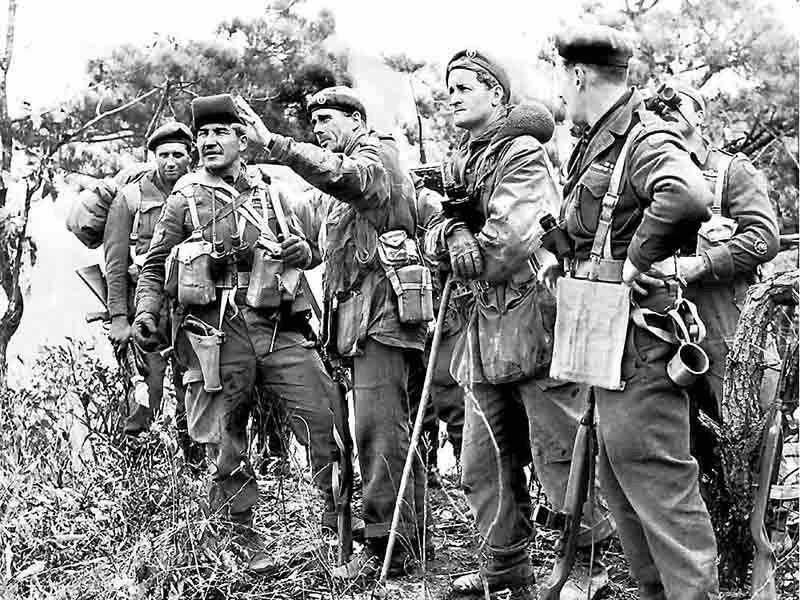
On June 3, 1940, Prince officially joined the army and was assigned to the Royal Canadian Engineers’ 1st Field Park Company. By 1942, he had risen to the rank of sergeant in the Canadian Parachute Battalion. After being selected for the 1st Canadian Special Service Battalion, he became part of an elite force trained alongside an American commando unit that would later be known as the “Devil’s Brigade.”
Prince distinguished himself in battle in both Italy and France, utilizing the survival and tracking skills he had learned in his youth. He excelled as a stealth shooter near the front lines in Anzio, Italy. In February 1944, Prince volunteered to lay a 1,440-meter communication wire to an abandoned farmhouse located just 200 meters from a German artillery position. From this concealed location, he provided crucial intelligence to Allied forces for three days.
When his communication line was severed during enemy shelling, Prince disguised himself as a local farmer, casually tending the land around the farmhouse. Under the watchful eyes of German soldiers, he bent down to tie his shoelaces and quickly repaired the line without raising suspicion. At one point, he even shook his fist at both the Germans and the Allies, pretending to be frustrated with both sides. Thanks to his efforts, four enemy tanks that were attacking Allied forces were destroyed.
In the summer of 1944, while in France, Prince undertook a grueling 72-hour journey through unfamiliar terrain without food or water in search of an enemy encampment. Upon returning to Allied positions, he led his brigade to the German stronghold, resulting in the capture of approximately 1,000 enemy soldiers.
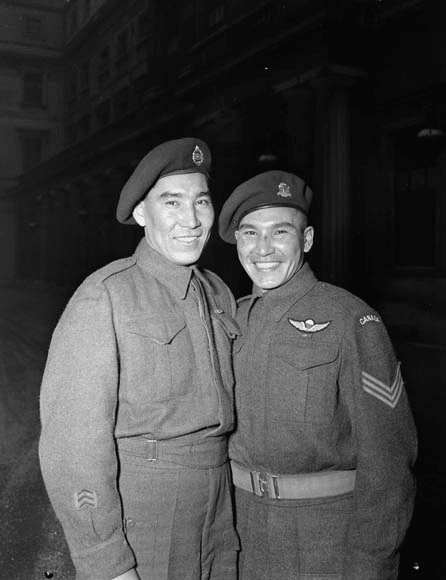
Following the campaign in France, Prince was summoned to Buckingham Palace, where King George VI personally awarded him the Military Medal (MM) on behalf of the American president. Prince became one of only 59 Canadians to receive the Silver Star during World War II. On June 15, 1945, he was honorably discharged and returned to Canada.
Post-War Life and Service in Korea
Despite his heroism, Prince faced systemic discrimination upon returning home. The Canadian government denied him the right to vote in federal elections, even though he had served in wartime, and he was also excluded from receiving the same benefits granted to other veterans.
He attempted to start a business, but it struggled to survive. Facing unemployment and continued racial discrimination, Prince reenlisted in the military and joined Princess Patricia’s Canadian Light Infantry (PPCLI).
He quickly regained his former rank and was assigned to train recruits for the Korean War. He then became part of the first Canadian unit deployed to Korea, serving as a rifle platoon sergeant in the PPCLI. Prince led numerous reconnaissance missions deep into enemy territory, conducting surprise attacks before retreating. During these raids, his unit successfully captured two enemy machine guns.
In 1951, Prince was forced to return to Canada due to a knee injury, but he rejoined his unit in Korea a year later for a second tour. During this deployment, he was wounded and spent several weeks in a military hospital. When the Korean Armistice Agreement was signed in 1953, ending active combat, Prince returned to Canada and continued his service in Winnipeg. He was honorably discharged in 1954.
For his two tours in Korea, Prince received numerous medals. He was also posthumously awarded the Canadian Volunteer Service Medal for Korea, which was established in 1991.
Throughout his life, Thomas Prince remained deeply committed to his people and their rights. He dedicated himself to advocating for Indigenous veterans and seeking justice for his community. However, he faced continued hardships and discrimination. He spent his final years in a Salvation Army shelter and passed away on November 25, 1977.
In the fall of 2022, Canada Post released a commemorative stamp honoring Thomas Prince’s life and legacy. The stamp depicts him against the backdrop of the Northern Lights, a fitting tribute to his extraordinary courage and contributions.
Sources: