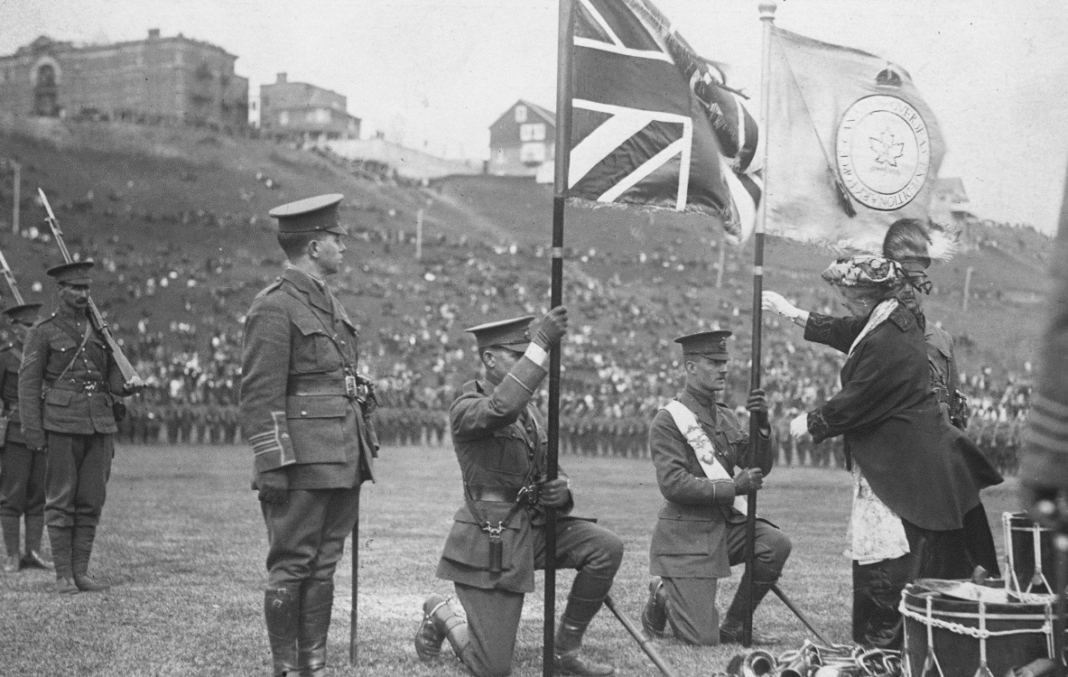

When Great Britain declared war on Germany on August 4, 1914, Canada was automatically drawn into the war alongside it. For Edmonton, a decision made thousands of miles away quickly ceased to be distant European news. The city’s streets filled with soldiers and volunteers, patriotic rallies swept through town, and ordinary civic spaces were repurposed for the military. As so often happens at the dawn of major conflicts, few could have anticipated just how long the ordeal would last.
City archives reveal that news of Canada entering the war was greeted with tremendous enthusiasm in Edmonton: parades filled the avenues, accompanied by stirring speeches and patriotic anthems. By the very next day, crowds had gathered outside the offices of the Edmonton Journal to enlist. Learn more here: edmonton-yes.com.
The Canadian Expeditionary Force: How Edmonton Mobilized for War
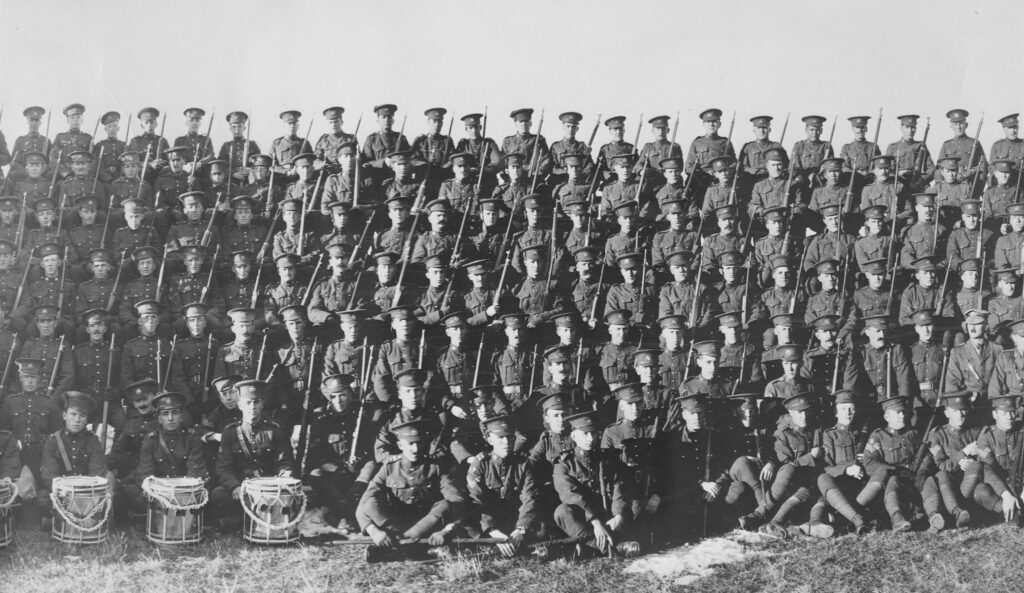
At the outbreak of the First World War, Edmonton’s military foundation rested on two local militia units: the 101st Regiment (Edmonton Fusiliers) and the 19th Alberta Dragoons. By August 1914, the city had quickly become a vital railway hub for recruiting and dispatching volunteers to the Canadian Expeditionary Force.
Public response to mobilization across the country was far from uniform. In French-speaking Quebec, particularly in Montreal, imperial involvement in a European conflict stirred far more complex feelings, soon precipitating a political and linguistic crisis. Even so, French Canadians also enlisted in large numbers; October 1914 saw the formation of the 22nd (French Canadian) Battalion in Quebec—the unit that would later become the famed Royal 22e Régiment.
The difference lay in the prevailing civic mood. While Montreal grappled with fierce debates over national identity, English-speaking Edmonton experienced a near-unanimous surge of imperial patriotism. The first Edmonton recruits departed for training by late August. Some joined Princess Patricia’s Canadian Light Infantry (PPCLI), while over 1,200 men from the 101st Regiment were dispatched to Camp Valcartier in Quebec for intensive training before deploying overseas with the first Canadian contingent.
Edmonton’s Military Camps: Adapting Civic Spaces for the War Effort
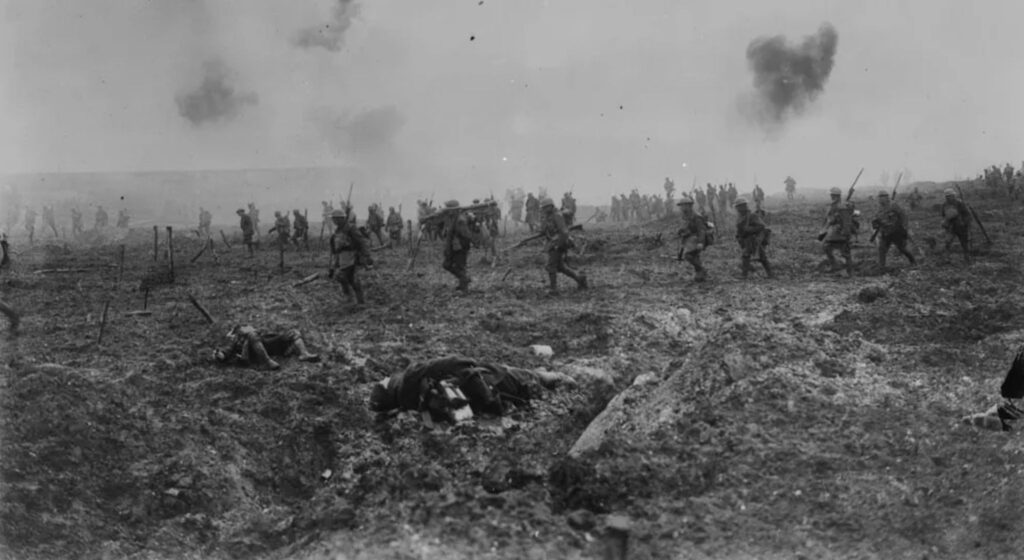
Mobilization quickly outgrew recruitment offices. As the flood of volunteers overwhelmed existing infrastructure, Edmonton began converting civilian facilities to serve military needs.
To billet and train new recruits, the municipality repurposed parks such as South Side Athletic Grounds and Victoria Golf Links, schools like McKay Avenue and King Edward, and the spacious Edmonton Exhibition Grounds. City hall covered all utility costs for heating and water, funded lighting for temporary barracks, and provided enlisted men with free passage on Edmonton’s streetcars.
The centerpiece of this military footprint was the Edmonton Drill Hall (today known as the Prince of Wales Armouries Heritage Centre), completed in 1915. It promptly became the primary training depot for Canadian armed forces in the region.
Repurposing civic sites also served a strong public relations role. In 1915, substantial contingents of the 63rd and 66th Battalions were quartered at the Exhibition Grounds. Military reviews, marching drills, and arms demonstrations during public fairs proved remarkably effective at inspiring fresh waves of volunteers.
Khaki uniforms rapidly became a staple of everyday life across Alberta. Even though the trenches lay across the Atlantic, the war firmly embedded itself in Edmonton, reshaping the city’s public life.
Edmonton’s Battalions: Mobilization Numbers and the Western Front
The opening months of the Great War dispelled any illusions of a swift campaign wrapped up by Christmas. Recruitment drives continued at full throttle, and new infantry units were organized in Edmonton back-to-back.
By late 1915, the city had provided recruits for at least ten battalions, including the 9th, 31st, 49th, 51st, 63rd, and 66th. In November 1915, the Edmonton Morning Bulletin reported that more than 12,000 men from the area had taken the enlistment oath. The 49th Canadian Infantry Battalion (Edmonton Regiment) forged the closest relationship with the local community, standing as the city’s flagship unit.
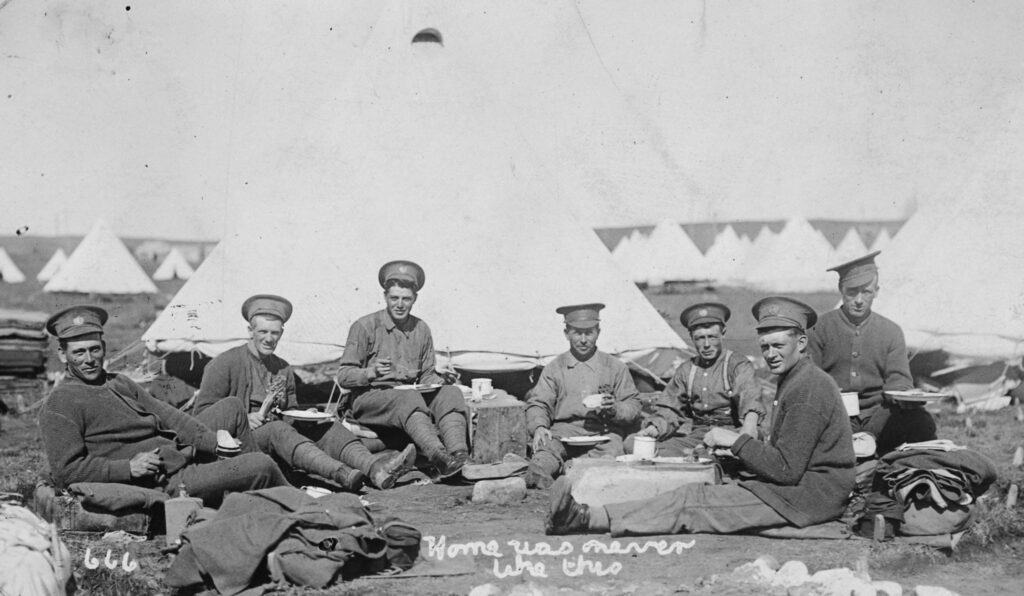
The 49th endured some of the fiercest actions on the Western Front: from poison gas attacks at Ypres and the muddy trenches of the Somme to the assault on Vimy Ridge, the quagmire of Passchendaele, and the victorious Hundred Days Offensive in 1918.
Over four years of global war, a significant share of Alberta’s eligible male population served in uniform. Official City of Edmonton records show that roughly 14,000 volunteers went overseas from the municipality. Veterans Affairs figures confirm that 2,280 Edmontonians gave their lives during the First World War.
It is easy to lose sight of individual lives amid broad mobilization statistics. Yet behind every entry in the service ledger was a real person who had only recently been working a job, making plans, or raising children before their future was permanently upended by war.
The Home Front (1914–1918): How the First World War Transformed Alberta Society
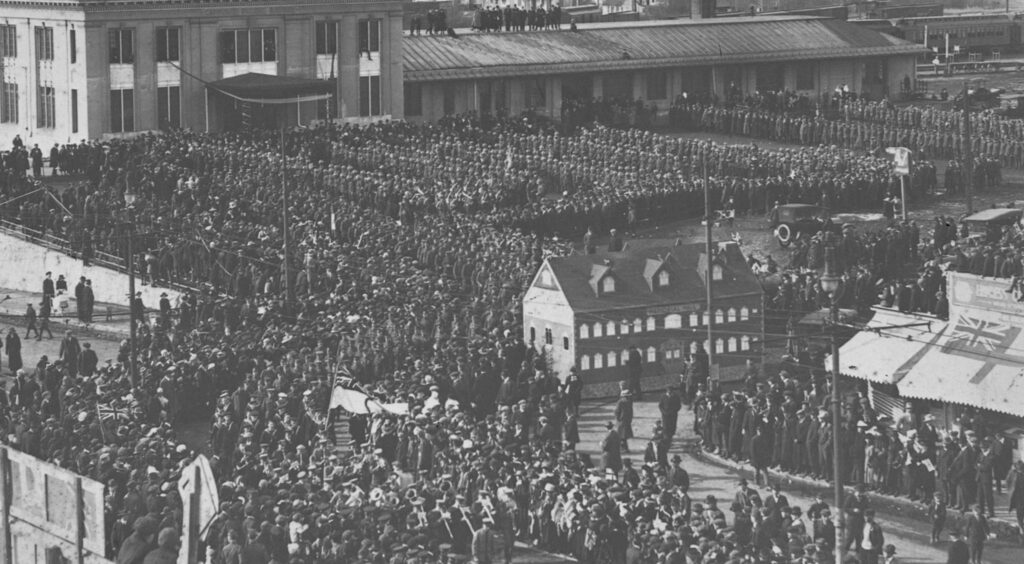
Mobilization extended far beyond signing recruitment papers. It fundamentally restructured local transit, schooling, city administration, retail, domestic life, and public culture. Even with front lines thousands of miles away, Edmonton adapted to existence in a constant state of war.
This period also brought a darker chapter. The zeal driving the war effort carried an unsettling undercurrent of paranoia. Edmonton was a diverse city, and the charged atmosphere sparked suspicion toward so-called “enemy aliens.” Municipal records chronicle the arrest and forced internment of Ukrainian Canadians and other immigrant groups who were cast into this category by authorities. The pretext was simple: most Ukrainians who had settled in Canada and Edmonton had emigrated from the Austro-Hungarian Empire.
The war changed Edmonton not only through stirring parades and packed enlistment halls, but through civil restrictions, institutional fear, and painful divides within the community. By 1918, it was painfully clear that the conflict had been anything but the short, romanticized venture many had envisioned in August 1914.
Over those four years, thousands of locals endured the hardships of the front, while the city organized its daily life around wartime demands. On November 11, 1918, the fighting finally ended. Yet for those back home in Edmonton, the armistice did not mean an immediate return to peacetime normal. Instead, it opened a demanding new phase: awaiting the return of troop trains, caring for the wounded, helping veterans find employment, and gradually rebuilding a stable civilian life.